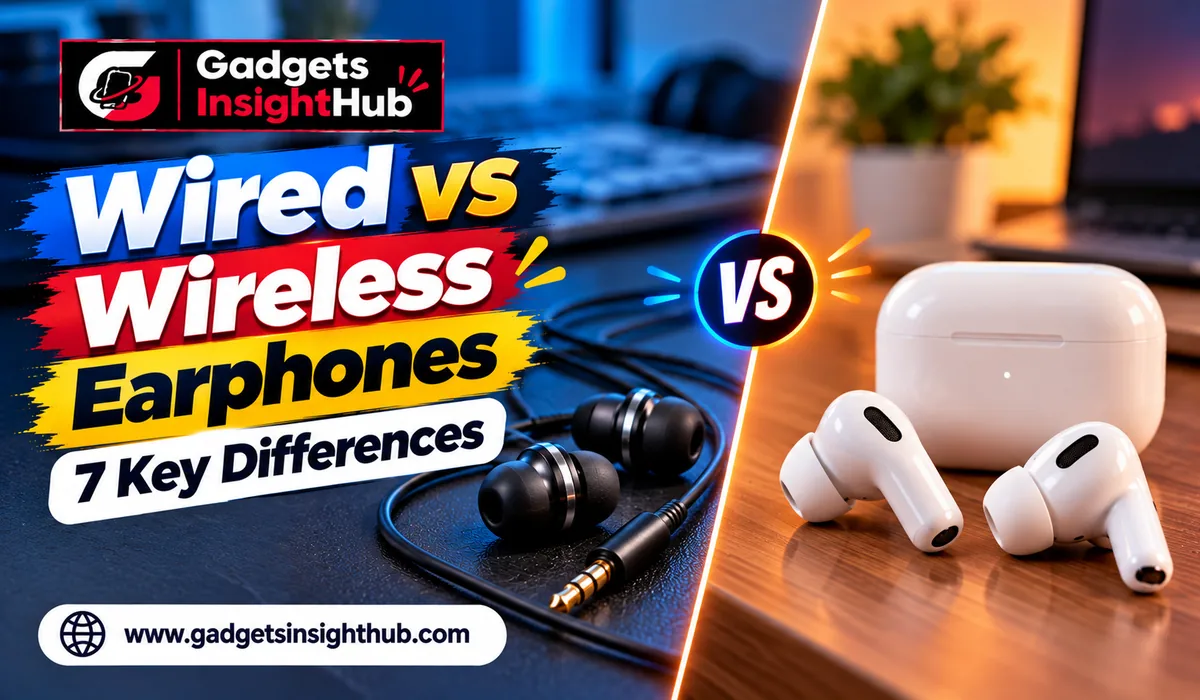
Choosing between wired and wireless earphones depends on how you listen to music, make calls, play games, and use your devices throughout the day. Wired earphones connect directly through a compatible audio port, while wireless earphones use Bluetooth or another wireless technology to transmit sound. Both options have advantages, and the right choice depends on your budget, listening habits, and preferred level of convenience.
Wireless earphones offer freedom of movement, fewer cables, and useful features such as touch controls and active noise cancellation on selected models. Wired earphones, on the other hand, do not need a separate battery for audio playback and can provide a straightforward connection without Bluetooth pairing. Before purchasing your next pair, understanding these seven key differences can help you choose earphones that suit your everyday needs.
1. Connectivity and Ease of Use
The most obvious difference between wired and wireless earphones is how they connect to your device. Wired earphones use a physical connection, such as a 3.5 mm audio plug or USB-C connector. Once connected to a compatible device, they are generally ready to use without Bluetooth pairing.
Wireless earphones typically connect through Bluetooth. You need to pair them with your smartphone, laptop, tablet, or another compatible device before listening. After the initial setup, they usually reconnect automatically when switched on and within range.
Wired earphones are convenient if you prefer a simple plug-and-play experience. However, some modern smartphones do not include a 3.5 mm headphone jack, so you may need USB-C earphones or a compatible adapter. Wireless models avoid this cable connection but require pairing and battery management.
2. Sound Quality and Audio Performance
Sound quality depends on several factors, including driver design, audio tuning, fit, and the quality of the audio source. Neither wired nor wireless earphones automatically deliver better sound in every situation.
Wired earphones transmit audio through a physical connection, which avoids Bluetooth compression and wireless transmission issues. They can be a good choice for listeners who want a direct connection, especially when using compatible high-quality audio equipment.
Wireless earphones use Bluetooth codecs to transmit audio. Depending on the earbuds, connected device, and supported codec, they can still deliver excellent sound quality. Some models also include equaliser settings, spatial audio, or other processing features.
If you mainly stream music through everyday apps, the difference may be less important than comfort, tuning, and fit. For critical listening, compare the actual sound performance of specific models rather than choosing based only on whether they are wired or wireless.
3. Battery Life and Power Requirements
Wired earphones generally do not need their own battery for basic audio playback. They receive the audio signal through their connection, making them convenient for long listening sessions without worrying about charging.
Wireless earphones require power for Bluetooth connectivity and their internal electronics. True wireless earbuds also use a charging case to recharge the individual earbuds between listening sessions. Battery life varies depending on the model, volume level, active noise cancellation, and other features.
If you regularly listen for many hours, wired earphones can be a practical choice because they do not run out of battery during ordinary playback. Wireless models offer greater freedom, but you need to keep them charged.
Some wired earphones also include active noise cancellation or other electronic features that require power, so not every wired model is completely battery-free. Check the product specifications if this matters to you.
4. Portability and Everyday Convenience
Wireless earphones are popular because they eliminate the cable connecting your device to your ears. This makes them convenient for walking, commuting, exercising, and working at a desk. True wireless models are especially compact because each earbud operates independently.
However, wireless earbuds can be misplaced more easily, and their charging cases take up additional space. You also need to keep track of battery levels and ensure the earbuds are charged before leaving home.
Wired earphones are straightforward to carry, but their cables can become tangled or catch on clothing and bags. Cable length may also limit movement when your device is placed on a desk or inside a pocket.
Your routine should guide your decision. If you move around frequently, wireless earphones may be more convenient. If you mainly listen while sitting at a desk or using a laptop, a wired pair may be perfectly suitable.
5. Latency and Gaming Performance
Latency refers to the delay between an audio signal being produced and the sound reaching your ears. This can matter when gaming, watching videos, or working with audio that needs precise timing.
Wired earphones generally offer very low latency because audio travels through a direct connection. This makes them useful for competitive gaming, rhythm games, music production, and other activities where timing matters.
Bluetooth earphones can introduce additional audio delay. The amount depends on the Bluetooth implementation, codec, device, and software. Some wireless gaming earbuds include dedicated low-latency modes or 2.4 GHz wireless transmitters to reduce delay.
For casual video streaming, the difference may not be noticeable because many devices compensate for audio delay. If you play competitive games or work with audio, wired earphones are often the simpler choice unless you select a wireless model specifically designed for low latency.
6. Durability and Maintenance
Both wired and wireless earphones can last for years when used carefully, but they have different potential weaknesses.
Wired earphones may develop cable damage, loose connectors, or connection problems near the plug. Models with detachable cables can be easier to repair because you may be able to replace the cable without replacing the entire earphone.
Wireless earphones have no long audio cable, but they contain batteries that gradually lose capacity over time. Their charging cases, charging contacts, and internal electronics also require care. Small true wireless earbuds can be difficult to repair if a component fails.
For either type, avoid pulling cables, exposing the earphones to moisture beyond their rated protection, or storing them carelessly. Cleaning the ear tips and keeping charging contacts free of debris can also help maintain performance.
7. Price and Overall Value
Wired earphones are often more affordable, particularly if you need a basic pair for music, calls, or online classes. They can provide good sound without requiring features such as Bluetooth connectivity, a charging case, or a rechargeable battery.
Wireless earphones are available across a wide range of budgets. Entry-level models provide basic Bluetooth audio, while more expensive options may include active noise cancellation, multipoint connectivity, advanced microphones, customisable sound, and wireless charging.
The best value depends on the features you actually need. If you mainly listen to music at a desk, a well-made wired pair may offer excellent value. If you commute frequently, exercise, or switch between devices, paying more for wireless convenience may make sense.
Also consider long-term costs. Wireless earbuds may eventually need replacement as their batteries age, while wired models can remain useful as long as their cable, connector, and drivers continue working.
Wired vs Wireless Earphones: Comparison Table
| Feature | Wired earphones | Wireless earphones |
| Connection | Physical cable | Bluetooth or another wireless connection |
| Sound quality | Depends on design and source | Depends on design, codec, and source |
| Battery requirement | Usually none for basic playback | Requires charging |
| Movement | Cable can restrict movement | Greater freedom of movement |
| Latency | Generally very low | Varies by connection and model |
| Maintenance | Cable and connector care | Battery and charging-case care |
| Price | Often affordable | Wide range of prices |
| Device compatibility | Requires a suitable port or adapter | Requires compatible wireless connectivity |
Which Type Should You Choose?
Wired earphones are a sensible option if you prefer a direct connection, want to avoid charging, or need low-latency audio for gaming and other timing-sensitive tasks. They can also be a cost-effective choice for students and people who mainly listen while sitting at a desk.
Wireless earphones are better suited to people who value convenience and freedom of movement. They work well for commuting, exercise, everyday calls, and switching between compatible devices. If you choose wireless models, check battery life, microphone quality, comfort, and connection stability before purchasing.
Ultimately, neither type is best for everyone. Consider your main activities, budget, and device compatibility before deciding. The best earphones are the ones that fit comfortably, perform reliably, and suit the way you use audio every day.
Frequently Asked Questions
1. Are wired earphones better than wireless earphones?
Wired earphones can offer very low latency and do not need charging for basic playback, while wireless earphones provide greater freedom of movement. The better choice depends on your priorities.
2. Do wireless earphones have worse sound quality?
Not necessarily. Modern wireless earphones can provide excellent sound, although the result depends on the drivers, audio tuning, Bluetooth codec, device compatibility, and audio source.
3. Which earphones are better for gaming?
Wired earphones are generally a reliable choice because they offer very low latency. Wireless gaming models with dedicated low-latency connections can also be suitable.
4. Do wired earphones need a battery?
Most basic wired earphones do not need their own battery for audio playback. However, some models with active electronic features may require a separate power source.
5. Are wireless earphones worth the extra cost?
They can be worth the cost if you value cable-free listening, portability, and features such as noise cancellation or multipoint connectivity. If you mainly need simple audio at a desk, wired earphones may offer better value.