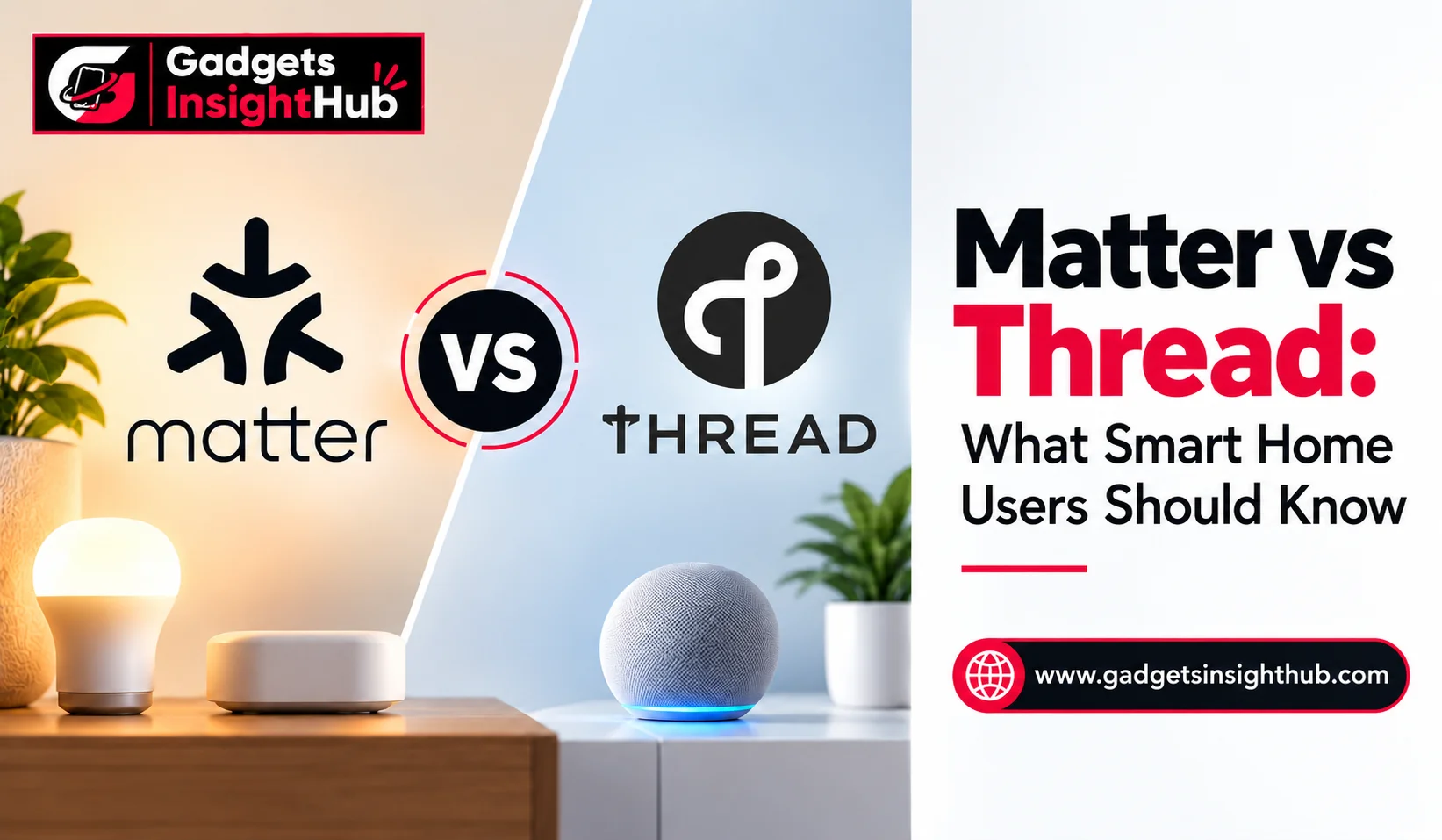
Matter vs Thread is an important comparison for anyone building a connected home. Both technologies help smart home devices communicate, but they serve different purposes. Matter is a communication standard that helps compatible devices work across supported smart home platforms, while Thread is a low-power wireless networking technology that connects devices.
Understanding the difference between Matter and Thread can help you choose smart bulbs, plugs, sensors, locks, and other connected products more confidently. It can also help you avoid compatibility problems when combining devices from different manufacturers.
What Is Matter?
Matter is a smart home connectivity standard developed through the Connectivity Standards Alliance (CSA). Its main goal is to improve interoperability so compatible smart home products can work with multiple supported ecosystems.
For example, a Matter-compatible smart plug may work with supported Apple Home, Google Home, Amazon Alexa, or Samsung SmartThings setups. However, the available features depend on the device and platform.
Key Features of Matter
- Cross-platform compatibility: Compatible devices can work with multiple supported smart home ecosystems.
- Simplified setup: Supported products can be added through compatible apps and controllers.
- Local communication: Matter supports local control for many operations, reducing dependence on cloud services.
- Secure communication: The standard includes security mechanisms for device authentication and communication.
- Multiple network options: Matter can operate over Wi-Fi, Ethernet, and Thread, depending on the device.
- Standardised device types: Supported categories include lighting, plugs, sensors, locks, and other smart home products.
Examples of Matter-Compatible Devices
- Smart bulbs and lighting systems
- Smart plugs and outlets
- Door and window sensors
- Smart locks
- Thermostats and compatible climate controls
- Selected smart appliances
Always check the exact model and its supported Matter features before buying. A device may support Matter for basic controls but offer additional functions only through its manufacturer’s app.
What Is Thread?
Thread is a low-power wireless networking protocol designed for connected devices such as smart sensors, bulbs, locks, and other home automation products.
Unlike Wi-Fi, which commonly connects devices directly to a home router, Thread creates a low-power mesh network. Compatible Thread devices can help relay communications through the network, improving coverage when the network is properly designed.
Key Features of Thread
- Low power consumption: Suitable for battery-powered sensors and similar devices.
- Mesh networking: Compatible devices can relay network traffic to improve coverage.
- IP-based communication: Thread uses IPv6, helping compatible devices communicate within IP-based networks.
- Responsive local control: It can support fast communication between compatible devices.
- Self-healing network: The network can adapt when supported devices or routes become unavailable.
- Border Router support: A Thread Border Router connects the Thread network to other IP networks, such as a home Wi-Fi or Ethernet network.
Thread does not automatically make a device compatible with every smart home platform. Matter over Thread is one common way for Thread devices to integrate with compatible ecosystems.
Matter vs Thread: Main Differences
| Feature | Matter | Thread |
| Main purpose | Smart home interoperability standard | Wireless networking protocol |
| Primary role | Defines how compatible devices communicate and work together | Connects compatible devices through a low-power network |
| Network technology | Uses Wi-Fi, Ethernet, or Thread, depending on the device | Uses a low-power wireless mesh network |
| Internet requirement | Many local controls can work without internet | Local Thread communication does not inherently require internet |
| Compatibility | Helps supported products work across smart home ecosystems | Requires compatible Thread devices and network infrastructure |
| Power consumption | Depends on the underlying network and device | Designed for low-power operation |
| Mesh networking | Depends on the underlying network | Yes |
| Extra hardware | May require a compatible controller or hub | Some setups need a Thread Border Router |
| Typical examples | Smart plugs, lights, locks, and sensors | Battery-powered sensors, smart locks, and lighting devices |
How Matter and Thread Work Together
Matter and Thread are complementary technologies rather than direct competitors.
Matter defines how compatible devices exchange smart home information. Thread provides the wireless network that carries that information for devices designed to use it.
For example, consider a smart door sensor that supports Matter over Thread.
- You install the sensor on a door.
- The sensor joins your Thread network.
- A compatible Matter controller adds the device to your smart home system.
- When the door opens, the sensor reports the event.
- Your compatible automation system can turn on a light or send an alert.
The exact setup depends on your devices, controller, and chosen platform. Some Matter devices use Wi-Fi instead of Thread, so a Thread Border Router is not required for every Matter installation.
Do You Need Matter or Thread for Your Smart Home?
The answer depends on the devices you plan to buy and how you want them to work together.
Choose Matter Support If You Want Cross-Platform Compatibility
Matter is particularly useful when you want devices from different manufacturers to work within a supported smart home ecosystem.
It can reduce the need to commit entirely to one brand. However, you should verify that the specific device category and features are supported by your preferred platform.
Choose Thread Devices for Low-Power Connectivity
Thread can be valuable for battery-powered sensors, smart locks, and other devices that benefit from low-power wireless communication.
A well-designed Thread network can also improve connectivity across compatible devices. To connect that network with your wider home network, you may need a Thread Border Router.
Consider Matter Over Thread for Both Benefits
A product that supports Matter over Thread combines Matter interoperability with Thread networking.
This can be an attractive option for compatible sensors, locks, and other smart home devices. Nevertheless, check the manufacturer’s requirements before purchasing, including whether you already own a compatible controller and Border Router.
Benefits of Matter for Smart Home Users
1. More Choice Between Brands
Matter helps reduce ecosystem restrictions for supported devices. You may be able to combine lighting from one manufacturer, plugs from another, and sensors from a third within a compatible platform.
2. Easier Device Setup
Compatible products can often be added through supported smart home apps using a more standardised setup process. This makes expanding your system easier than managing several completely separate platforms.
3. Better Local Control
Matter supports local communication for many operations. This can reduce reliance on cloud services for everyday controls, although remote access and certain advanced features may still require internet connectivity.
4. A More Flexible Smart Home
You can choose devices based on their features, price, and suitability rather than relying exclusively on one manufacturer’s product range.
However, interoperability does not guarantee that every advanced feature will be available in every app.
Benefits of Thread for Smart Home Users
1. Efficient Battery-Powered Devices
Thread is designed for low-power communication. This makes it suitable for sensors that need to operate for long periods on batteries, although actual battery life depends on the device and usage.
2. Mesh Network Coverage
Thread devices can form a mesh network, allowing compatible devices to relay traffic. This can improve communication across a home compared with relying on one direct wireless connection.
3. Responsive Device Communication
Thread supports local network communication, making it suitable for responsive automation involving sensors, lights, and locks.
4. Less Dependence on Wi-Fi for Every Device
Thread devices communicate through their own low-power mesh network rather than each needing a direct Wi-Fi connection. A Border Router bridges the Thread network to the wider IP network when needed.
Limitations to Consider Before Buying
Although Matter and Thread can simplify smart home installations, they do not eliminate every compatibility issue.
- Matter support varies: Not all products support Matter, and not every feature is available across all platforms.
- Thread requires compatible equipment: A Thread device may need a suitable Border Router and controller.
- Older devices may need upgrades: Some existing products cannot gain Matter or Thread support through a simple software update.
- Wi-Fi remains useful: High-bandwidth devices, such as many security cameras and streaming products, commonly use Wi-Fi or Ethernet.
- Platform requirements differ: Some systems require specific hubs, apps, or software versions.
- Regional availability matters: Product versions, certifications, and integrations can vary by market.
Before buying a new device, check the exact model number, supported network protocol, required accessories, and compatibility with your existing setup.
Matter vs Thread: Which Is Better?
Neither technology is universally better because they solve different problems.
Matter is the better feature to prioritise when your main goal is to connect compatible devices across supported smart home ecosystems. Thread is worth considering when you need low-power wireless networking for sensors, locks, and similar devices.
For many users, the most practical strategy is to choose a compatible smart home controller, prioritise Matter support where cross-platform compatibility matters, and use Thread devices when their power and networking benefits are useful.
Frequently Asked Questions
1. Is Matter the same as Thread?
No. Matter is a smart home interoperability standard, while Thread is a low-power wireless networking protocol. Matter can use Thread as one of its network options.
2. Does Matter require Thread?
No. Matter can operate over Wi-Fi, Ethernet, or Thread, depending on the device. A Thread Border Router is necessary only when your setup uses Thread devices that require one.
3. Can Thread devices work without the internet?
Thread devices can communicate locally without an internet connection. However, remote access, cloud services, and some integrations may stop working during an internet outage.
4. Do I need a hub for Matter devices?
It depends on the device and platform. Some products can connect through a compatible smart home controller, while Matter over Thread devices generally need a suitable controller and Thread Border Router for the intended setup.
5. Should I buy Matter-compatible smart home devices in 2026?
Matter-compatible devices are worth considering if you want flexibility across supported smart home platforms. Before buying, confirm that the product supports the features you need and works with your existing controller and network.