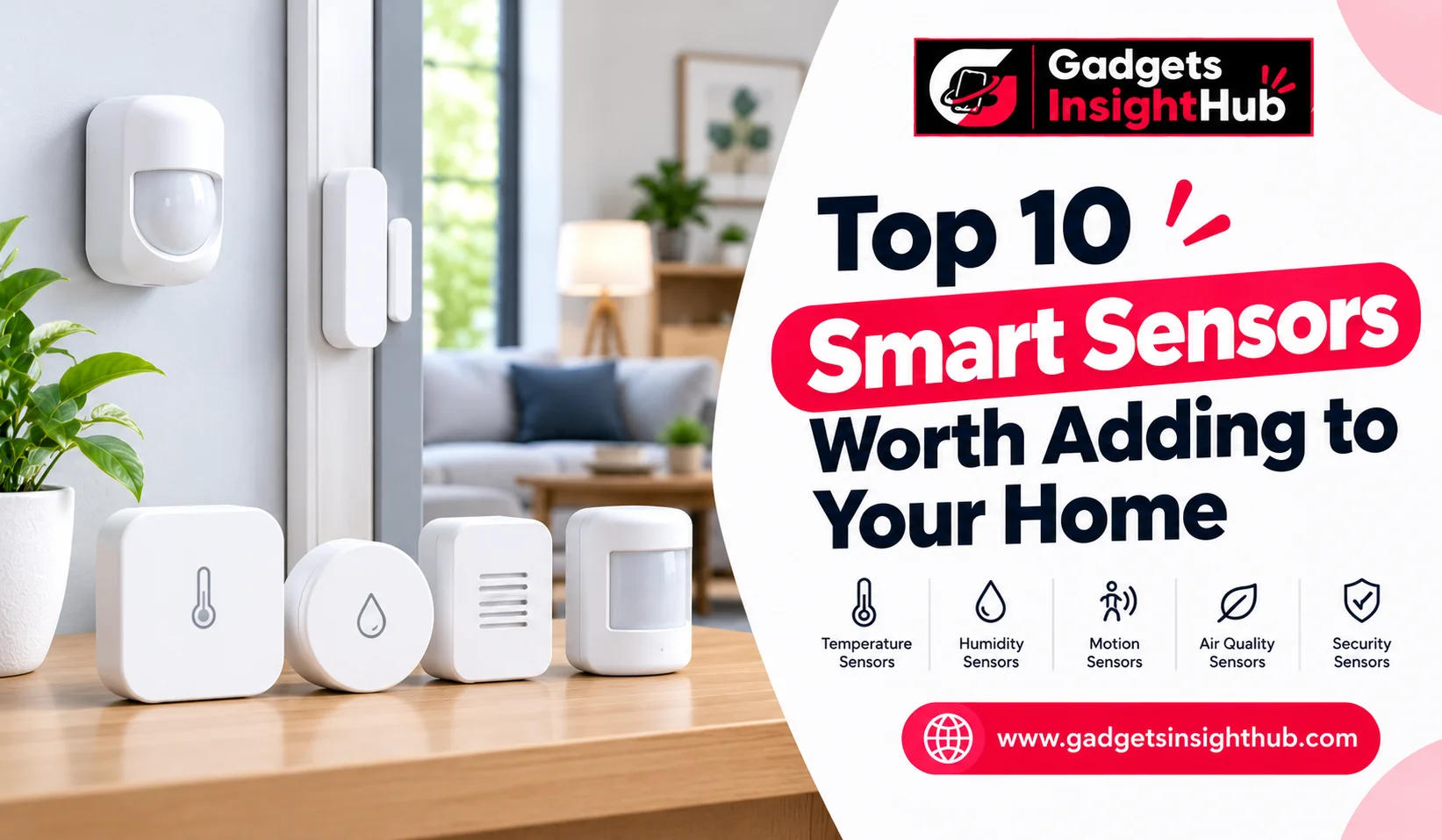
Smart sensors make a connected home more responsive by detecting changes in your surroundings and triggering useful actions. They can notify you when a door opens, detect water leaks, monitor indoor temperature, or turn on lights when someone enters a room.
The top 10 smart sensors worth adding to your home include motion sensors, door and window sensors, smoke alarms, water leak detectors, and air-quality monitors. Each sensor serves a different purpose, so the best choice depends on your home, daily routine, and security needs.
You do not need to install every sensor at once. Start with the areas that matter most, such as entry points, bathrooms, kitchens, or rooms where you want automatic lighting. Before purchasing, check whether each sensor works with your existing smart home platform and whether it requires a hub, subscription, or professional installation.
1. Motion Sensor: TP-Link Tapo T100

A motion sensor detects movement and can trigger connected devices automatically. The TP-Link Tapo T100 is designed for smart home routines, making it useful for hallways, entrances, and other areas where automatic lighting can improve convenience.
Key Features
- Detects movement within its supported sensing range.
- Offers adjustable sensitivity.
- Works with compatible Tapo devices and automation routines.
- Uses a battery for wireless operation.
- Requires a compatible Tapo hub.
- Can trigger supported lights or camera actions when movement is detected.
Best for: Automatically switching on lights or triggering security routines when someone enters an area.
2. Door and Window Sensor: TP-Link Tapo T110

The Tapo T110 is a contact sensor that detects whether a door or window opens or closes. It can help you monitor entry points and create automations without installing a full security system.
Key Features
- Detects opening and closing events.
- Sends app notifications through a compatible setup.
- Uses a compact two-part magnetic design.
- Supports smart home automation with compatible Tapo devices.
- Uses a replaceable battery.
- Can help trigger connected camera or lighting actions.
Best for: Monitoring main doors, balcony doors, windows, and cupboards.
3. Water Leak Sensor: TP-Link Tapo T300
Water leaks can damage floors, cupboards, and walls before you notice them. The Tapo T300 is designed to detect water and alert you, making it useful near sinks, washing machines, and other areas where leaks may occur.
Key Features
- Detects water leaks and drips.
- Built-in alarm rated up to 90 dB.
- IP67-rated water-resistant construction.
- Battery-powered operation.
- Compatible with supported Tapo smart home setups.
Best for: Detecting leaks early around bathrooms, kitchens, washing machines, and water heaters.
A leak sensor provides an alert but does not automatically stop the water supply unless it is connected to a compatible shutoff system.
4. Temperature and Humidity Monitor: TP-Link Tapo T315
Temperature and humidity sensors help you understand the conditions inside your home. The Tapo T315 includes a display, making it easy to check readings without opening an app.
Key Features
- Measures indoor temperature and relative humidity.
- Features a 2.7-inch e-ink display.
- Provides real-time environmental readings.
- Supports monitoring through compatible Tapo systems.
- Can help trigger automations when connected to supported devices.
Best for: Monitoring bedrooms, living rooms, storage areas, and other spaces where temperature and humidity matter.
5. Presence Sensor: Aqara Presence Sensor FP2
Traditional motion sensors may stop detecting activity when someone sits still. The Aqara Presence Sensor FP2 uses millimetre-wave radar to detect presence, even when a person makes only small movements.
Key Features
- Detects presence in rooms up to approximately 40 square metres under suitable conditions.
- Supports configurable detection zones.
- Can detect multiple people simultaneously.
- Includes a light sensor for lighting automation.
- Supports compatible Apple Home, Google Home, and Alexa integrations.
- Offers local automation features with supported setups.
Best for: Automatically controlling lighting and other devices based on whether someone is occupying a room.
The FP2 requires continuous power. Configure its detection zones carefully to improve reliability.
6. Vibration Sensor: Aqara Vibration Sensor T1
A vibration sensor detects shaking, impacts, or other movement affecting the surface where it is installed. The Aqara Vibration Sensor T1 can help monitor selected objects and trigger notifications through a compatible smart home system.
Key Features
- Detects vibration and impact events.
- Suitable for monitoring selected doors, windows, drawers, or cabinets.
- Supports automation through a compatible Aqara setup.
- Compact design for discreet placement.
- Battery-powered operation.
Best for: Receiving alerts when a monitored object is shaken or disturbed.
A vibration sensor is not a replacement for a certified security alarm. Test its placement and sensitivity to reduce false alerts.
7. Air-Quality Monitor: Airthings View Plus
An air-quality monitor helps you understand environmental conditions that may not be visible. The Airthings View Plus tracks several indoor air measurements, helping you identify changes and decide when to improve ventilation.
Key Features
- Monitors radon, particulate matter, carbon dioxide, and volatile organic compounds.
- Measures temperature, humidity, and air pressure.
- Provides readings through its display and compatible app.
- Supports wireless connectivity.
- Helps track environmental changes over time.
Best for: Homeowners who want broader information about indoor air quality.
Sensor availability and measurement capabilities can vary by region and product configuration. Use readings as guidance, and follow appropriate testing procedures for specific hazards such as radon.
8. Smart Smoke and Carbon Monoxide Detector
Smoke and carbon monoxide detectors are essential safety devices. Smart models add connected alerts and monitoring features, allowing you to receive notifications through supported systems when an alarm is triggered.
Key Features
- Detects smoke or carbon monoxide, depending on the model.
- Sounds a local alarm when a hazardous condition is detected.
- May send phone notifications through a compatible connection.
- Some models provide battery-status and fault alerts.
- Can integrate with compatible smart home systems.
Best for: Households that want early warnings about potential fire or carbon monoxide hazards.
Choose a certified detector that meets local safety requirements. A smart notification feature should supplement, not replace, a suitable standalone alarm. Install and maintain detectors according to the manufacturer’s instructions.
9. Smart Gas Leak Detector
A gas leak detector can provide an early warning when it detects the specific combustible gas it is designed to monitor. Connected models may also send alerts through an app or activate compatible alarms.
Key Features
- Detects supported combustible gases.
- Provides an audible alarm on suitable models.
- Some models support remote notifications.
- May integrate with compatible gas shutoff valves.
- Can provide additional warning for selected kitchen or utility areas.
Best for: Homes using LPG or other combustible gases, provided the detector is designed and certified for the specific gas.
Placement is important because different gases behave differently. Follow the detector manufacturer’s instructions and local safety guidance. If you suspect a gas leak, leave the area and contact the appropriate emergency service rather than relying on a smart home routine.
10. Outdoor Light and Motion Sensor: Philips Hue Outdoor Sensor
An outdoor motion sensor can activate compatible lighting when someone approaches a doorway, driveway, or garden. The Philips Hue Outdoor Sensor combines motion detection with light sensing to support automatic outdoor lighting.
Key Features
- Detects movement in outdoor areas.
- Includes a daylight sensor.
- Can trigger compatible Philips Hue lighting.
- Supports adjustable sensitivity and lighting settings.
- Weather-resistant design for suitable outdoor installation.
- Supports scheduled and sensor-based lighting routines through the compatible system.
Best for: Improving convenience and visibility around entrances, pathways, and gardens.
Comparison of the Top 10 Smart Sensors
| Sensor or model | What it detects | Best use |
| TP-Link Tapo T100 | Motion | Automatic lighting |
| TP-Link Tapo T110 | Door and window opening | Entry monitoring |
| TP-Link Tapo T300 | Water leaks | Early leak alerts |
| TP-Link Tapo T315 | Temperature and humidity | Indoor comfort monitoring |
| Aqara Presence Sensor FP2 | Human presence | Room-based automation |
| Aqara Vibration Sensor T1 | Vibration and impact | Object disturbance alerts |
| Airthings View Plus | Multiple air-quality indicators | Indoor environmental monitoring |
| Smart smoke and CO detector | Smoke or carbon monoxide | Fire and CO warnings |
| Smart gas leak detector | Supported combustible gases | Gas safety |
| Philips Hue Outdoor Sensor | Outdoor movement and light levels | Automatic exterior lighting |
How to Choose the Right Smart Sensor
Consider What You Need to Detect
Start with the problem you want to solve. Motion sensors are useful for automatic lighting, contact sensors monitor entry points, and water leak sensors can help prevent damage. Air-quality monitors serve a different purpose by tracking environmental conditions.
Check Connectivity and Hub Requirements
Some sensors connect through Wi-Fi, while others use Zigbee, Thread, or Bluetooth. Certain models require a compatible hub or controller. Check these requirements before buying, especially if you already use Alexa, Google Home, Apple Home, or another automation platform.
Review Battery Life and Maintenance
Battery-powered sensors are easy to install, but you need to monitor battery levels and replace batteries when necessary. For important security and safety devices, make sure you receive low-battery or fault alerts when supported.
Plan Sensor Placement Carefully
Position sensors according to their intended use. Place leak detectors near likely sources of water, contact sensors on suitable door or window frames, and motion sensors where they can detect movement without frequent false triggers.
Protect Your Privacy and Security
Choose reputable manufacturers that provide security updates. Use strong account passwords, enable two-factor authentication when available, and review which devices collect or share activity data.
Frequently Asked Questions
1. What are the most useful smart sensors for a home?
Motion sensors, door and window sensors, water leak detectors, and temperature sensors are useful starting points because they support everyday automation and help monitor common household problems.
2. Do smart sensors need Wi-Fi?
Not always. Some sensors use Zigbee, Thread, or Bluetooth and connect through a compatible hub or controller. Others connect directly through Wi-Fi.
3. Can smart sensors work without the internet?
Some sensors and compatible hubs support local automations without internet access. However, remote notifications and cloud-based functions may stop working during an outage.
4. Are smart sensors difficult to install?
Many battery-powered sensors use adhesive mounting and require little installation work. Wired devices and certified safety equipment may require professional installation.
5. Which smart sensor should beginners buy first?
A motion sensor or door and window sensor is a practical starting point for automation and entry monitoring. If water leaks are a concern, a dedicated leak detector may be a more important first purchase.