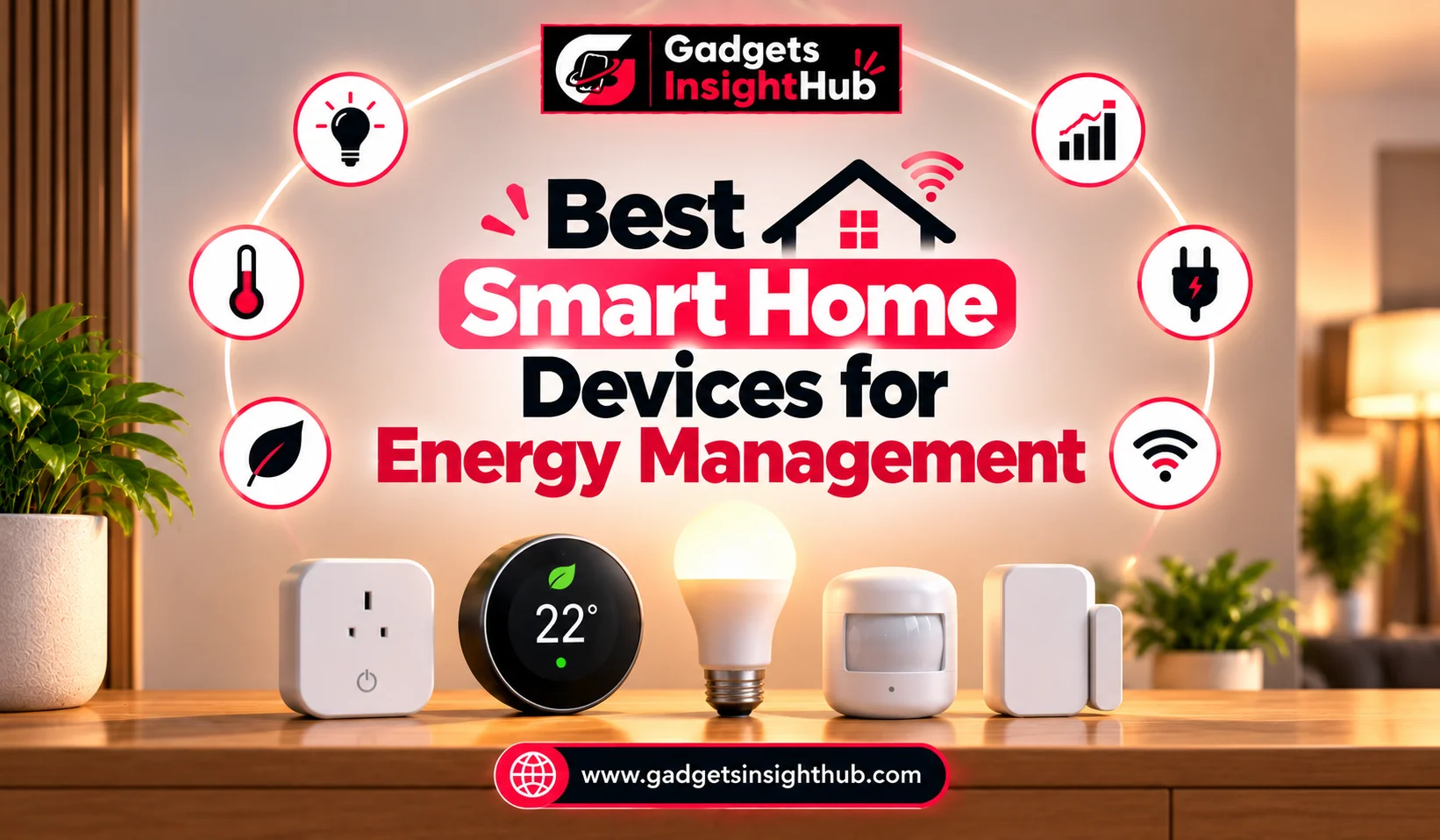
The best smart home devices for energy management help you understand electricity consumption, reduce unnecessary power use, and make everyday household routines more efficient. From smart plugs that track appliance usage to smart thermostats that adjust heating and cooling, these devices can make it easier to manage energy without constantly monitoring every switch.
Choosing the right smart home devices for energy management depends on your home, electrical system, appliances, and budget. You do not need an expensive whole-home automation system to get started. Even a few well-chosen devices can help you identify waste, automate lighting, and monitor selected appliances.
In this guide, you will learn about useful energy-monitoring devices, how they work, what features to compare, and how to choose options that fit your needs. You will also discover practical ways to manage electricity consumption while keeping installation costs and ongoing expenses under control.
1. Smart Plugs With Energy Monitoring

Best for tracking individual appliances
Smart plugs with energy monitoring are among the most practical smart home devices for energy management. They connect compatible appliances to your smart home network and allow you to monitor electricity usage through a mobile app.
Some models display real-time power consumption, daily usage, historical data, and estimated electricity costs. This information helps you identify appliances that consume more power than expected.
What to look for
- Real-time wattage and cumulative energy readings
- Scheduling and automatic on-and-off controls
- Compatibility with your existing smart home ecosystem
- A suitable electrical rating for the intended appliance
- Clear energy reports and usage history
For example, a compatible energy-monitoring plug can help you compare the electricity consumption of a television, desktop computer, or other suitable appliance.
In India, check the plug’s current rating and safety certification carefully. Do not use an ordinary smart plug for a high-power appliance unless the manufacturer explicitly rates it for that load.
2. Whole-Home Energy Monitors
Best for understanding total household consumption
A whole-home energy monitor measures electricity usage across a home’s electrical system. Depending on the model, it can provide real-time consumption data, historical trends, and alerts when electricity use rises unexpectedly.
Unlike a smart plug, which measures an individual connected device, a whole-home monitor can provide a broader picture of household energy consumption.
This makes it useful when you want to understand the combined demand from lighting, kitchen appliances, air conditioners, water heaters, and other electrical equipment.
Key features to consider
- Real-time household power monitoring
- Historical electricity consumption reports
- Alerts for unusually high usage
- Support for your electrical panel and supply configuration
- Integration with compatible home automation systems
Installation requirements vary by product. Some monitors connect to the electrical panel and require a qualified electrician. Always choose a model designed for your local electrical system.
3. Smart LED Bulbs
Best for reducing lighting waste
Smart LED bulbs combine energy-efficient LED technology with features such as remote control, scheduling, dimming, and automation.
You can set lights to turn off automatically at certain times or adjust brightness according to the activity taking place. For example, you can use brighter lighting while working and lower brightness when watching television.
Smart bulbs do not necessarily consume less electricity than every other LED bulb. Their energy benefits depend on the efficiency of the bulb and how effectively you use its controls.
Useful features
- Adjustable brightness
- Scheduled lighting
- Motion or occupancy-based automation when supported
- Remote switching
- Compatibility with voice assistants or smart home hubs
Start with frequently used rooms rather than replacing every bulb. This approach keeps initial costs manageable while helping you identify where automated lighting is most useful.
4. Smart Switches and Energy-Monitoring Relays
Best for controlling existing electrical circuits
Smart switches allow you to control lights and compatible electrical circuits through an app, voice command, or automated schedule. Some models also include energy-monitoring functions.
They can be a useful alternative when you want to automate several lights without installing individual smart bulbs in every fitting.
Energy-monitoring relays and smart circuit devices can also measure selected circuits, depending on their design. However, these products differ considerably in installation requirements and supported loads.
Before buying
- Confirm compatibility with your existing wiring.
- Check whether the switch requires a neutral wire.
- Verify the electrical rating and supported load type.
- Look for energy-monitoring features if consumption data is important.
- Use a qualified electrician for fixed electrical installations.
A smart switch is most useful when you want convenient control of existing lighting. If you mainly want to measure electricity consumption, choose a model with explicit energy-monitoring support.
5. Smart Air Conditioner Controllers
Best for homes that frequently use air conditioning
Air conditioning can contribute significantly to electricity consumption in warm climates. A compatible smart controller can help you manage cooling schedules and avoid running an air conditioner longer than necessary.
Some controllers communicate with compatible infrared-controlled air conditioners, while other solutions use dedicated interfaces. Their available features depend on the air conditioner and controller model.
You might schedule cooling before arriving home or switch the system off after your usual bedtime. Some controllers also support temperature-based automation and remote access.
Features worth checking
- Compatibility with your air conditioner
- Temperature scheduling
- Remote control and automatic routines
- Support for the original operating modes
- Energy reports, if offered by the device
A controller does not automatically make an air conditioner more efficient. Set reasonable temperatures, maintain the filters, and avoid cooling empty rooms unnecessarily.
If your air conditioner already includes useful scheduling and energy-saving features, you may not need a separate controller.
6. Smart Thermostats
Best for compatible heating and cooling systems
Smart thermostats help regulate indoor temperature using schedules, sensors, and automated controls. They can reduce unnecessary heating or cooling when rooms are unoccupied or when your household needs change.
These devices are especially useful in homes with compatible central heating, cooling, or other supported temperature-control systems.
However, many Indian homes use split air conditioners with infrared remotes rather than thermostat-controlled central systems. In such cases, a compatible smart AC controller may be more suitable than a conventional smart thermostat.
What to compare
- Compatibility with your heating or cooling equipment
- Temperature scheduling and occupancy features
- Remote access and automation
- Installation requirements
- Energy reports and ecosystem support
Choose a thermostat only after confirming that it works with your equipment. A sophisticated device will provide little value if your existing system cannot use its main features.
7. Motion and Occupancy Sensors
Best for automatically controlling lights
Motion and occupancy sensors help smart home systems respond to activity in a room. When paired with compatible lights or switches, they can turn lighting on when someone enters and switch it off after the area becomes inactive.
These sensors can be useful in hallways, bathrooms, storerooms, and other spaces where lights are frequently left on.
Benefits of smart sensors
- Automatic lighting control
- Reduced time spent managing switches
- Customizable activation schedules
- Integration with compatible smart home devices
- Support for occupancy-based routines
Choose a sensor based on the room’s size, layout, and typical movement. Some motion sensors may not detect someone sitting still, while presence sensors may offer more suitable detection for certain indoor environments.
Set appropriate delays before switching lights off so that the system does not leave an occupied room in darkness.
8. Smart Power Strips
Best for managing several electronics together
A smart power strip provides multiple outlets with remote control or scheduling features. Depending on the model, it may allow individual outlets to be controlled separately or provide energy monitoring for connected devices.
This can be useful for a home office or entertainment area where a computer, monitor, speakers, and other electronics are used together.
For example, you could create a routine that switches off selected accessories when your workday ends.
Important features
- Individually controlled outlets, where needed
- Energy monitoring, if supported
- Overload protection and appropriate safety certification
- Suitable power and current ratings
- Compatibility with your smart home system
Do not assume that a smart power strip reduces standby consumption automatically. Check which outlets are controlled and whether the connected equipment can safely be switched off.
Avoid connecting high-power appliances or daisy-chaining power strips unless the manufacturer explicitly permits the arrangement.
9. Smart Fans and Fan Controllers
Best for automating everyday cooling
Smart fans and compatible fan controllers provide remote operation, scheduling, and sometimes speed adjustment. These features can make it easier to turn fans off when rooms are empty or adjust their operation throughout the day.
A compatible controller may also allow an existing fan to work with a smart home system. However, not every fan supports every type of controller.
Features to consider
- Fan and controller compatibility
- Speed control
- Scheduling and remote operation
- Voice assistant integration
- Energy monitoring, if available
Fans can help you feel comfortable without relying entirely on air conditioning. Nevertheless, their actual electricity use depends on the motor, speed setting, and operating duration.
Choose energy-efficient fan models when replacement is necessary, and avoid purchasing a new fan solely for smart features if your existing model already meets your needs.
10. Smart Solar and Battery Energy Management Systems
Best for homes with solar panels or battery storage
Homes with solar panels or battery storage can benefit from energy management systems that monitor generation, consumption, and stored electricity.
Depending on the system, these devices may show when solar production exceeds household demand, track battery charge levels, or help schedule compatible loads around available energy.
Some advanced systems also coordinate supported appliances, electric vehicle chargers, or battery storage. Their capabilities depend on the inverter, battery, controller, and utility setup.
What to look for
- Solar generation and household consumption monitoring
- Battery status and charging information
- Compatibility with your inverter and storage system
- Historical energy reports
- Support for automated load management
These systems may require a larger initial investment than smart plugs or bulbs. Consider them when you already have solar equipment or are planning a broader energy upgrade.
Comparison of Smart Home Devices for Energy Management
| Device | Main purpose | Best suited for |
| Energy-monitoring smart plug | Tracks selected appliance usage | Beginners and renters |
| Whole-home energy monitor | Measures household electricity consumption | Homeowners seeking detailed data |
| Smart LED bulb | Automates lighting | Everyday lighting control |
| Smart switch or relay | Controls existing electrical circuits | Multi-light installations |
| Smart AC controller | Automates compatible air conditioners | Homes that use air conditioning regularly |
| Smart thermostat | Regulates supported temperature systems | Homes with compatible heating and cooling |
| Motion sensor | Automates lights based on activity | Hallways and less frequently occupied rooms |
| Smart power strip | Controls selected electronics | Home offices and entertainment areas |
| Smart fan controller | Automates compatible fans | Frequently used rooms |
| Solar energy manager | Tracks solar generation and household demand | Solar-equipped homes |
How to Choose the Right Energy Management Devices
The best device depends on the energy problem you want to solve. Start by reviewing your electricity bill and identifying the appliances that operate most frequently or draw substantial power.
Use these guidelines to narrow your choices.
- For beginners: Start with an energy-monitoring smart plug for a suitable appliance.
- For lighting waste: Consider efficient LED bulbs, smart switches, or occupancy sensors.
- For high air-conditioning use: Explore compatible scheduling and control options.
- For detailed household data: Consider a whole-home energy monitor.
- For solar-powered homes: Look at compatible solar monitoring and load-management features.
- For a tight budget: Begin with one device and expand only when the information or automation proves useful.
Also, check whether each device requires a hub, paid subscription, additional sensor, or professional installation. These expenses can affect its overall value.
Tips for Getting Better Results From Energy Management Devices
Buying smart home devices is only the first step. To get meaningful benefits, use their information to change how your household consumes electricity.
- Measure before making changes. Record the usage of suitable appliances before deciding which routines to create.
- Automate unnecessary operation. Schedule lights and compatible electronics to switch off when they are not needed.
- Focus on major energy users. Air conditioning, water heating, and other high-consumption equipment may deserve more attention than small electronics.
- Review your data regularly. Compare energy reports over time and look for patterns.
- Check standby consumption. Use energy-monitoring devices to identify equipment that continues drawing power when not actively used.
- Keep devices secure and updated. Protect accounts with strong passwords and update device software when updates are available.
- Calculate the total cost. Compare the purchase price, installation expenses, subscriptions, and realistic potential savings.
Smart devices can help you manage electricity more effectively, but savings are not guaranteed. Their value depends on the energy you can actually avoid using and the cost of making the upgrade.
Frequently Asked Questions
1. What is the best smart home device for monitoring electricity usage?
An energy-monitoring smart plug is a practical starting point because it can track the consumption of a suitable individual appliance. A whole-home energy monitor is more appropriate when you want to understand overall household electricity use.
2. Do smart home devices automatically reduce electricity bills?
No. Smart devices provide monitoring and control features, but savings depend on how you use them. Scheduling lights, managing cooling, and reducing unnecessary operation can help lower consumption.
3. Are smart plugs with energy monitoring worth buying?
They can be useful if you want to measure an appliance’s power consumption and identify avoidable usage. Before buying, confirm that the plug supports energy monitoring and is rated for the intended appliance.
4. Can I use smart energy management devices in an Indian home?
Yes. Many smart bulbs, plugs, sensors, and compatible controllers can be used in Indian homes. Check local voltage and socket compatibility, current ratings, safety certification, Wi-Fi requirements, and installation instructions before purchasing.
5. Which smart home devices should I buy first to save energy?
Start with devices that address a clear source of waste. An energy-monitoring smart plug can help you understand appliance consumption, while efficient LED bulbs and compatible lighting controls can reduce unnecessary lighting use. Choose additional devices based on your household’s energy patterns rather than buying everything at once.