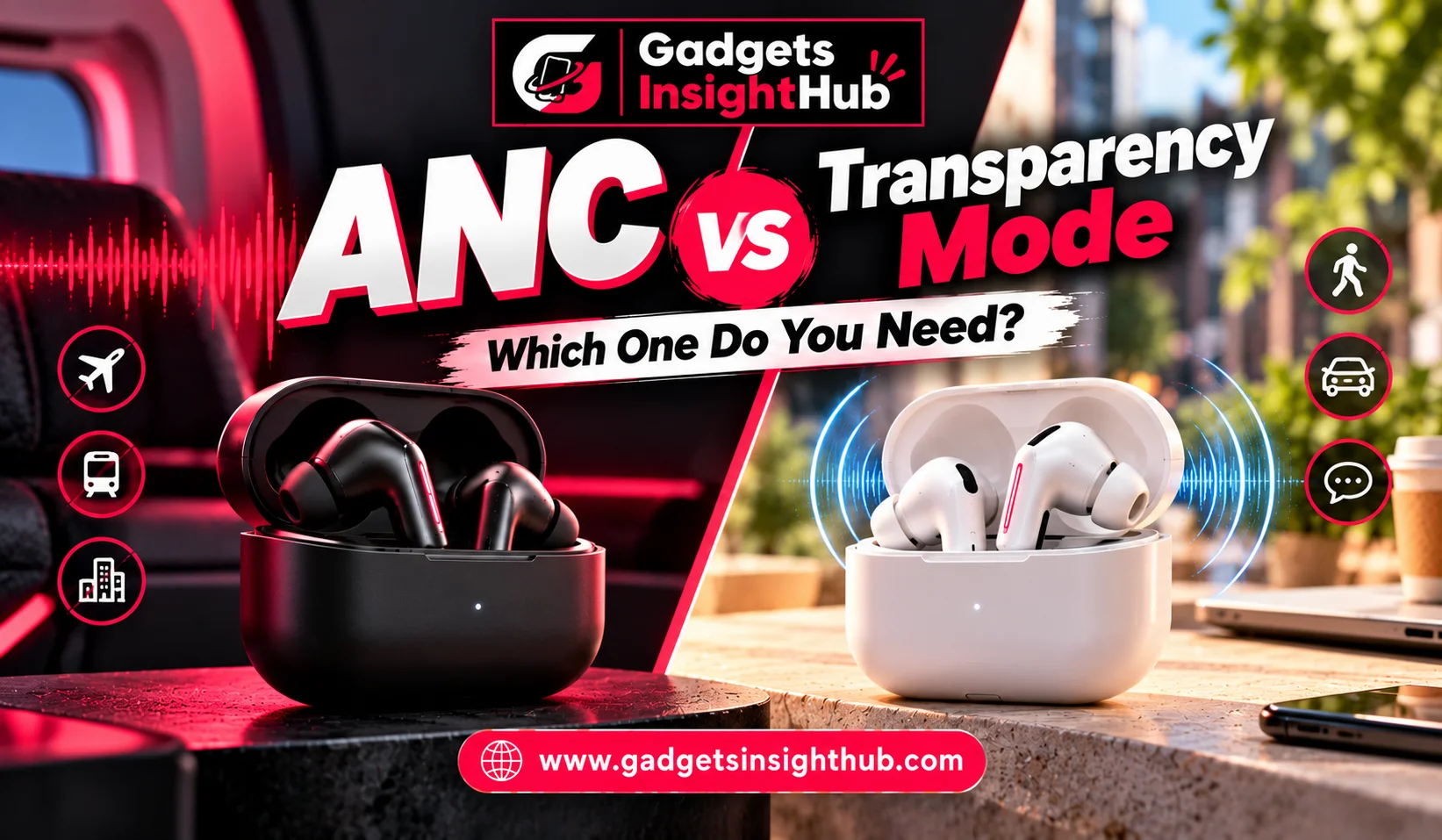
Modern wireless earbuds offer several listening features designed to make everyday audio more convenient. Two of the most useful are Active Noise Cancellation (ANC) and Transparency Mode. Although both use microphones and audio processing, they serve different purposes. ANC helps reduce unwanted background noise, while Transparency Mode allows outside sounds to reach your ears so you can remain aware of your surroundings.
Choosing between these features depends on how and where you use your earbuds. If you travel frequently, work in a busy office, or prefer listening without distractions, ANC may be more useful. On the other hand, if you walk outdoors, commute through crowded areas, or need to hear people while listening to music, Transparency Mode can be a better choice. Understanding how both features work will help you select earbuds that suit your daily routine.
1. What Is Active Noise Cancellation (ANC)?
Active Noise Cancellation, commonly called ANC, is a technology that reduces unwanted environmental sounds. Earbuds use built-in microphones to detect surrounding noise and generate sound signals that help counteract it before it reaches your ears.
ANC is particularly effective at reducing steady, low-frequency sounds, such as the hum of an aircraft cabin, air-conditioning systems, or the rumble of a train. However, it may not completely eliminate sudden noises, loud conversations, or every sound in your environment.
Many earbuds combine ANC with passive noise isolation. Their ear tips create a seal that physically blocks some outside sound, while the electronic system reduces additional noise.
ANC is useful when you want to concentrate, relax, or enjoy audio without increasing the volume to overcome background noise. Nevertheless, you should remain aware of your surroundings when necessary, particularly in public places.
2. What Is Transparency Mode?
Transparency Mode allows outside sounds to pass through your earbuds using external microphones and audio processing. Instead of trying to cancel surrounding noise, the earbuds reproduce environmental sounds so you can hear conversations, announcements, and other activity while listening to audio.
This feature is especially convenient when you do not want to remove your earbuds every time someone speaks to you. For example, you can listen to music while working at a desk and still hear a colleague asking a question.
Transparency Mode can also help you hear public transport announcements or communicate with people during everyday activities. Some models offer adjustable transparency levels, allowing you to control how much environmental sound you hear.
However, Transparency Mode does not make earbuds identical to listening without them. The reproduced sound may feel different from natural hearing, and microphone performance varies between models. It should not be treated as a substitute for attention to your surroundings.
3. ANC vs Transparency Mode: The Main Differences
The primary difference between ANC and Transparency Mode is how each feature handles outside sound. ANC attempts to reduce unwanted noise, whereas Transparency Mode brings environmental sound into your listening experience.
| Feature | ANC | Transparency Mode |
| Main purpose | Reduce background noise | Make outside sounds audible |
| Best environment | Planes, trains, offices | Streets, shops, workplaces |
| Conversations | Reduces some surrounding voices | Helps you hear nearby people |
| Listening experience | More isolated and focused | More connected to your surroundings |
| Typical use | Music, travel, concentration | Announcements, quick conversations |
| Safety consideration | Can reduce awareness | Helps awareness but does not guarantee safety |
| Battery consumption | Uses additional power | May also use additional power |
Neither mode is automatically better. The right option depends on whether you need to reduce distractions or stay connected to what is happening around you.
4. When Should You Use ANC?
ANC is most useful when background noise interferes with your listening experience. It can make long journeys more comfortable and help you focus when working or studying in places with steady environmental noise.
For example, if you travel by plane or train, ANC can reduce the constant rumble of the journey. At home, it may help minimise the sound of fans or air-conditioning. In an office, it can reduce some background noise and make it easier to concentrate.
ANC is particularly worth considering if you frequently listen to podcasts, attend online meetings, or work in shared spaces. It can also help you enjoy audio at a more comfortable volume rather than constantly turning it up to compete with surrounding noise.
Keep in mind that ANC performance varies. If your main problem is nearby conversation, sudden sounds, or wind, the improvement may be less noticeable than it is with steady background noise.
5. When Should You Use Transparency Mode?
Transparency Mode is useful when you want to listen to audio without becoming completely disconnected from your environment. It is especially convenient during everyday activities that involve conversations, announcements, or changes in your surroundings.
You might use it while shopping, waiting at a railway station, working with colleagues, or listening to a podcast at home. It can also make short conversations more convenient because you may not need to remove your earbuds each time someone speaks.
Transparency Mode is particularly helpful when you need to hear public announcements or communicate with people while keeping your audio playing. Some earbuds automatically switch to transparency when they detect speech, although this feature is not available on every model.
For outdoor activities, remember that hearing environmental sounds does not guarantee safety. Keep the volume moderate, stay attentive to traffic, and remove your earbuds when a situation requires your full attention.
6. Which Mode Is Better for Travelling?
For air travel and long train journeys, ANC is generally more useful because it reduces steady engine and cabin noise. This can make listening to music, watching films, or resting more comfortable.
Transparency Mode becomes more useful when you need to hear boarding announcements, speak to staff, or communicate with travel companions. Switching between the two modes allows you to enjoy quieter listening when appropriate and restore environmental awareness when necessary.
If you travel frequently, consider earbuds that offer both modes and allow you to switch between them easily. An adjustable transparency setting can also help you find a comfortable balance between outside sounds and your audio.
ANC and transparency mode serve different purposes, but other earbud features also affect comfort, sound quality, and everyday usability. Check out the top 10 earbud features that matter before buying to make a more informed purchasing decision.
7. Which Mode Is Better for Work and Study?
The best mode depends on your workspace. ANC can help you concentrate in a noisy office, library, or shared home environment. It is particularly useful when steady background sounds distract you from reading, writing, or completing tasks.
Transparency Mode is more suitable when you need to remain available for conversations. For example, you may prefer it while working with a team, waiting for someone to speak to you, or listening for notifications and announcements.
If your day includes both focused tasks and frequent conversations, choose earbuds that make switching modes straightforward. This flexibility can be more useful than relying on one mode throughout the day.
8. Do ANC and Transparency Mode Affect Battery Life?
Both features use microphones and electronic processing, so they can affect battery consumption. The exact difference depends on the earbuds, their settings, and how they are used.
Manufacturers often advertise different battery figures for ANC-enabled and ANC-disabled listening. Transparency Mode may also consume power, although its effect varies by model. High volume, frequent calls, and other features can further reduce playback time.
If battery life is important, check the manufacturer’s figures for each listening mode rather than relying on one headline number. A charging case with fast charging can also help when you need additional power during the day.
9. Can You Use ANC and Transparency Mode Together?
ANC and Transparency Mode serve opposite purposes, so they are generally selected as separate listening modes rather than being used at full strength simultaneously. However, some earbuds provide adaptive or hybrid settings that adjust noise control according to the environment.
Adaptive noise control can automatically change the listening experience when you enter a noisy location or begin a conversation. Other models offer conversation-awareness features that temporarily lower playback volume and let outside sounds through when you speak.
These features can be convenient if your environment changes frequently. However, their behaviour varies by product, so check which modes are supported before buying.
10. What Should You Look for When Buying Earbuds With ANC and Transparency Mode?
If you want both features, focus on their actual performance rather than simply checking whether they appear on the specification sheet. Some earbuds reduce steady background noise effectively but reproduce outside sounds less naturally in Transparency Mode.
Consider these factors before purchasing:
- ANC performance: Check how well the earbuds reduce transport noise, fans, and other sounds you commonly encounter.
- Transparency quality: Look for natural-sounding voices and adjustable levels if you often speak to people while wearing earbuds.
- Ease of switching: Controls should make it simple to change modes without opening an app every time.
- Comfort and fit: Well-fitting ear tips improve passive isolation and can affect overall noise-control performance.
- Battery life: Compare expected playback time with ANC enabled and other features in use.
- Call quality: If you attend meetings frequently, check microphone performance separately from ANC.
- Adaptive features: Consider automatic mode switching if you move between quiet and noisy environments throughout the day.
The best earbuds are those that perform well in the situations you encounter most often. If you rarely travel or work in noisy places, you may not need the most advanced ANC available. If you frequently move between focused listening and conversations, good Transparency Mode can be equally valuable.
Frequently Asked Questions
1. Is ANC better than Transparency Mode?
Neither is universally better. ANC is more useful for reducing background noise, while Transparency Mode helps you hear conversations and environmental sounds.
2. Does Transparency Mode turn off noise cancellation?
In most earbuds, selecting Transparency Mode changes the noise-control system so outside sounds become audible. The exact behaviour depends on the model and its available settings.
3. Does ANC improve sound quality?
ANC can make audio easier to hear in noisy environments, but it does not automatically improve the underlying sound quality. Driver performance, audio tuning, fit, and source quality also matter.
4. Should you use Transparency Mode while walking outdoors?
It can help you hear your surroundings, but it does not guarantee safety. Keep your volume low, remain alert to traffic, and remove your earbuds when you need full environmental awareness.
5. Should you buy earbuds with both ANC and Transparency Mode?
If you regularly move between noisy environments and situations where you need to hear people, having both modes is useful. If you mostly listen in a quiet room, you may prefer to prioritise comfort, sound quality, and battery life instead.