
Wearable technology is becoming an important part of everyday life, changing how people monitor fitness, manage personal routines, communicate, and interact with digital services. From smartwatches and smart rings to connected glasses and advanced health sensors, wearable devices are evolving beyond simple accessories. In 2026, the industry is increasingly focused on personalised insights, artificial intelligence, improved battery performance, and seamless connections between devices.
Consumers are also becoming more selective about the technology they wear. Comfort, privacy, practical features, and long-term value are influencing purchasing decisions. Manufacturers are responding by developing smaller sensors, more intuitive software, and products designed to support different lifestyles.
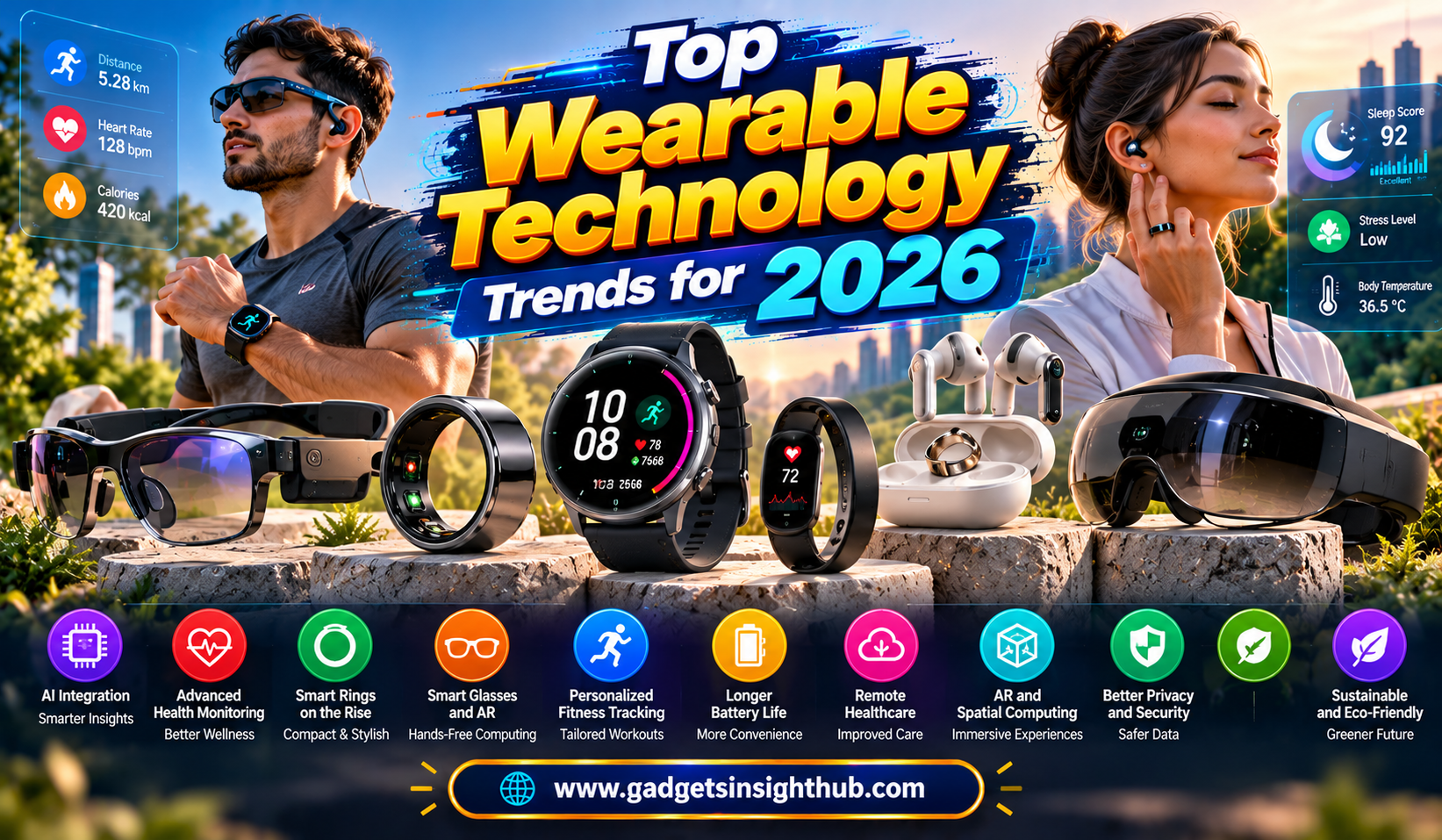
Understanding these developments helps consumers, businesses, and technology enthusiasts recognise where the wearable market is heading. The following trends highlight the technologies, features, and design approaches shaping wearable technology in 2026.
1. Artificial Intelligence in Wearable Devices
Artificial intelligence is becoming a significant part of modern wearable technology. Instead of simply recording measurements, devices are increasingly designed to interpret information and present useful insights. This development is changing how users interact with fitness trackers, smartwatches, and other connected accessories.
AI-powered features can analyse activity patterns, identify changes in sleep routines, and provide personalised suggestions based on collected information. For example, a fitness smartwatch may recommend adjusting exercise intensity after examining recent activity and recovery measurements. These recommendations depend on the device’s capabilities and should be treated as guidance rather than definitive assessments.
Voice assistants are another area of development. Users may be able to interact with compatible wearables using natural language to request information, manage reminders, or control connected devices.
As AI capabilities improve, manufacturers will need to balance convenience with battery efficiency, processing requirements, and privacy. Some tasks can be performed directly on devices, while others rely on connected smartphones or cloud services.
The most useful AI features will be those that simplify everyday decisions instead of overwhelming users with unnecessary notifications.
2. Advanced Health and Wellness Monitoring
Health and wellness monitoring remains one of the strongest drivers of wearable technology adoption. Modern devices can measure several physiological signals and help users understand their everyday patterns without requiring constant manual input.
Smartwatches and smart rings increasingly support heart rate monitoring, sleep tracking, activity measurement, and temperature-related trends. Certain devices also offer features such as electrocardiogram recordings or blood oxygen estimates, depending on the model and regional approvals.
These capabilities can encourage people to pay closer attention to their routines. A wearable may reveal that sleep duration changes after late-night screen use or that daily movement decreases during particularly busy work periods.
However, consumer wearables are not replacements for professional medical assessments. Measurements can be affected by device fit, movement, sensor limitations, and individual differences. Medical features also vary by manufacturer and location.
In 2026, the important trend is the movement from isolated readings toward longer-term wellness insights. By organising information over time, wearable devices can make personal health data easier to understand while requiring users to remain aware of its limitations.
3. Smart Rings Become More Popular
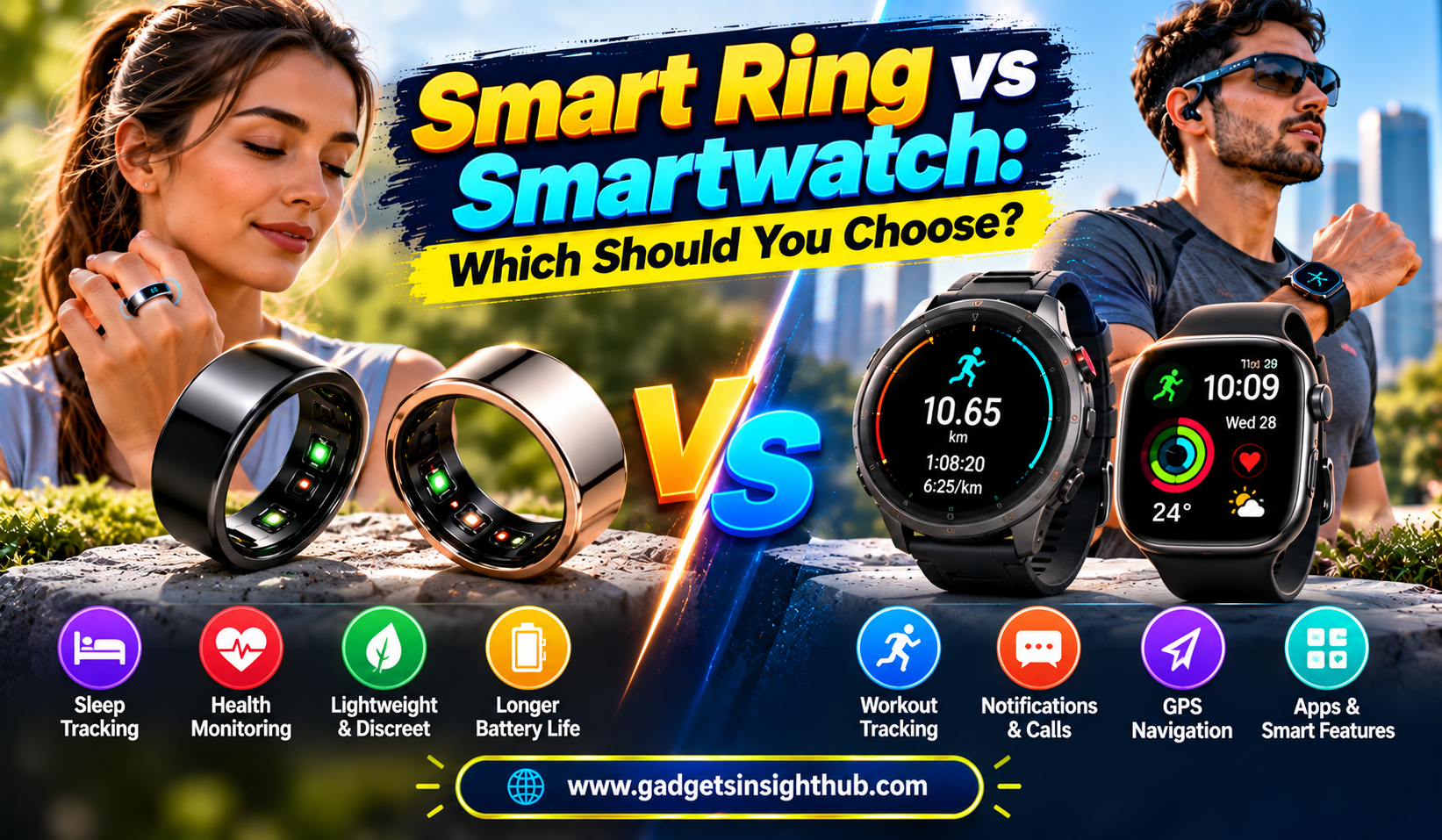
Smart rings are gaining attention as alternatives to conventional wrist-worn devices. Their compact size and discreet appearance appeal to consumers who want wellness tracking without wearing a large screen throughout the day.
These rings can monitor supported measurements such as sleep patterns, heart rate, activity, and temperature trends. Their companion applications present the collected information through summaries that help users review daily habits and recovery patterns.
One advantage of smart rings is their suitability for overnight wear. People who find watches uncomfortable while sleeping may prefer a lightweight ring, although comfort depends on finger size, material, and individual preferences.
Manufacturers are also exploring improved sensor arrangements, longer battery life, and more useful software experiences. Subscription pricing is another important consideration because some products restrict detailed insights to paying members.
Despite their growing popularity, smart rings are not suitable for everyone. Accurate sizing, charging arrangements, smartphone compatibility, and data privacy should all influence purchasing decisions.
The future of this category will depend on making wellness tracking convenient, reliable, and comfortable enough for consistent everyday use.
4. Smart Glasses and Hands-Free Computing
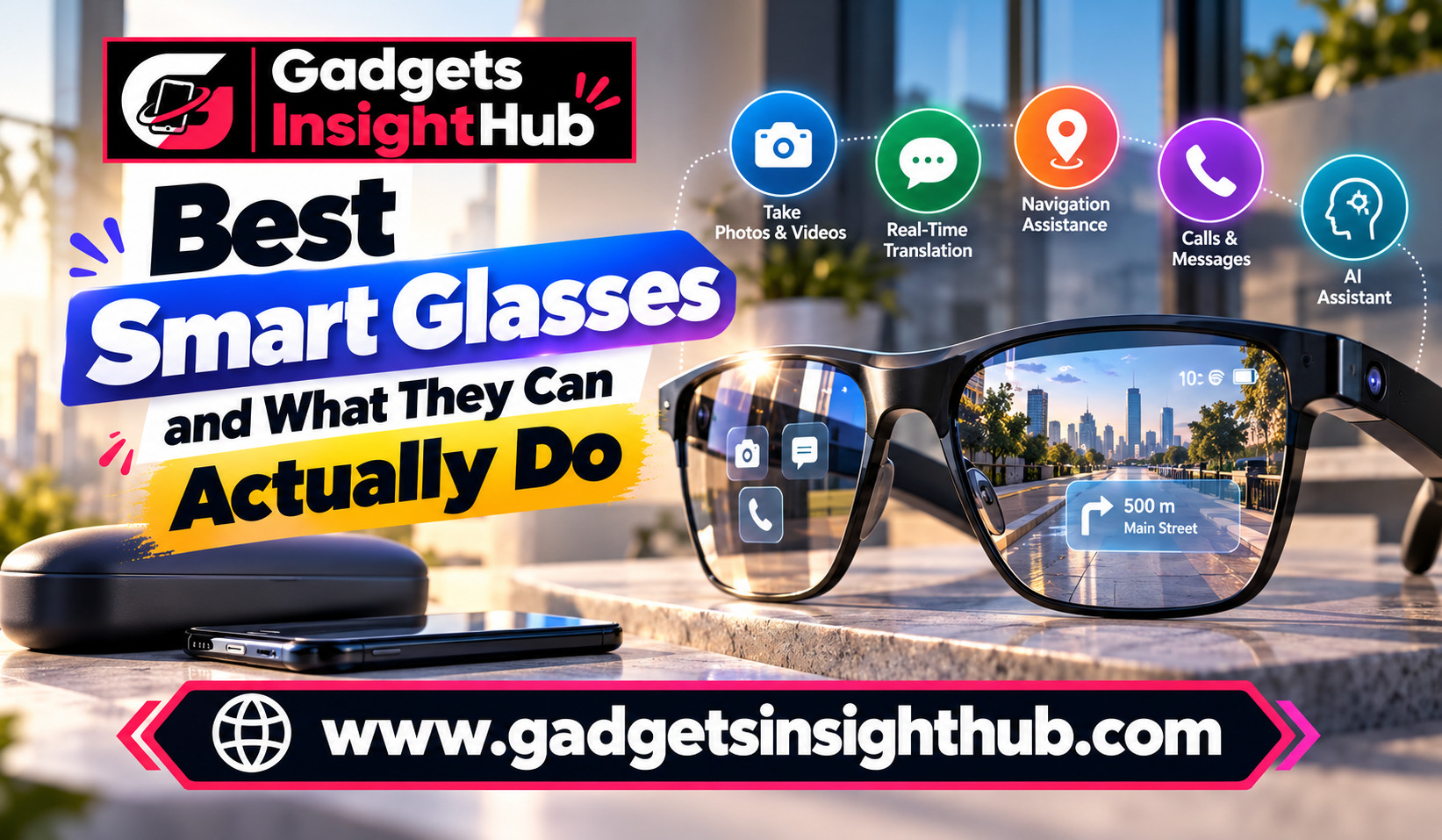
Smart glasses are developing into a more practical category of wearable technology. Depending on the model, they may combine cameras, microphones, speakers, voice assistants, and compact displays within familiar-looking frames.
These devices can support hands-free communication, audio playback, navigation prompts, photography, and AI-assisted interactions. Some models include displays that present selected information directly within the user’s field of view, while others rely primarily on audio and smartphone connectivity.
For professionals, smart glasses may eventually provide useful assistance in situations where holding a phone is inconvenient. Travellers could access directions, while technicians might receive instructions during equipment inspections.
However, smart glasses also raise concerns about privacy, social acceptance, battery life, and visual comfort. Camera-equipped products need clear indicators and responsible recording practices to help protect people nearby.
In 2026, improvements in lightweight components, voice interaction, and on-device processing are helping manufacturers explore more natural wearable experiences. Wider adoption will depend on delivering useful functions without making the glasses uncomfortable, distracting, or socially intrusive.
5. More Personalised Fitness Tracking
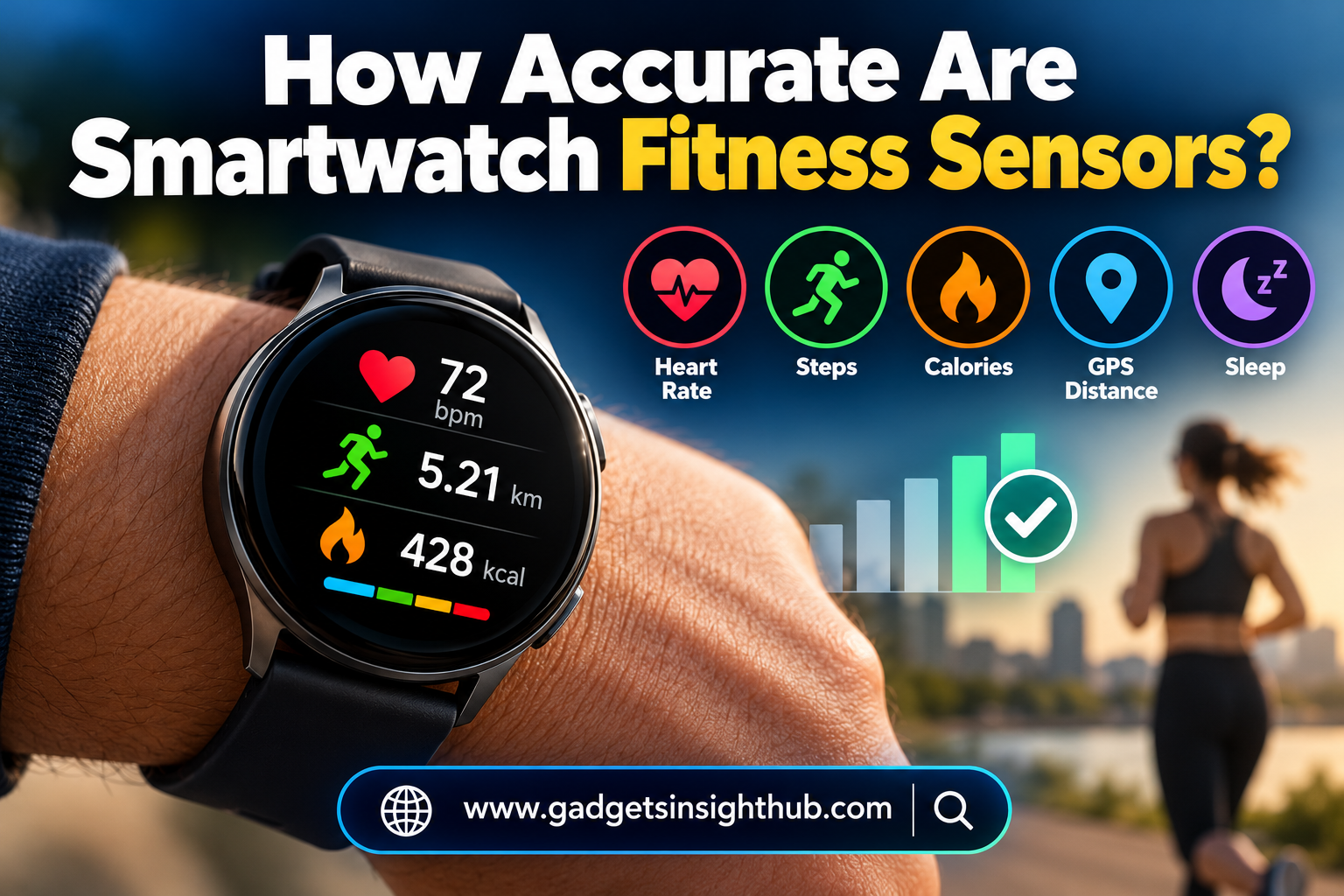
Fitness wearables are moving beyond basic step counts and workout durations. Many devices now combine heart rate measurements, GPS information, training history, and recovery estimates to provide a more detailed picture of physical activity.
Runners may use these tools to examine pace and distance, while cyclists can review route information and exercise intensity. Other users may benefit from reminders to move regularly or summaries showing how consistently they meet personal activity goals.
Personalisation is becoming increasingly important. A beginner who wants to walk more needs different information from an experienced athlete preparing for a marathon. Software that adapts its presentation to individual goals can make wearable technology easier to use.
Nevertheless, training recommendations should account for the limitations of estimated metrics. Calorie expenditure, readiness scores, and recovery measurements are not perfectly precise, and users should avoid treating them as absolute rules.
In 2026, the strongest fitness wearables are those that combine understandable information, useful coaching features, comfortable designs, and dependable tracking rather than simply offering the largest number of statistics.
6. Longer Battery Life and Efficient Charging
Battery performance remains a major factor in wearable technology adoption. Devices that require frequent charging can interrupt sleep monitoring, exercise recording, and everyday use.
Manufacturers are addressing this challenge through more efficient processors, improved sensor management, software optimisation, and better power-control systems. Some fitness-focused watches can operate for several days or longer under suitable settings, while feature-rich smartwatches may require more frequent charging.
Solar-assisted charging is also available in selected outdoor-oriented watches. Its effectiveness depends on sunlight exposure, device design, and usage conditions, so it should not be assumed to eliminate charging entirely.
Wireless charging and compact charging cases are improving convenience across several wearable categories. Smart rings, in particular, benefit from charging accessories designed to fit easily into bags or bedside spaces.
In 2026, battery innovation is not simply about increasing advertised operating time. Manufacturers must balance power consumption with bright displays, continuous sensing, GPS tracking, and connected features.
The most practical devices will provide predictable battery performance that matches how people actually use them.
7. Wearable Technology and Remote Healthcare
Wearables are becoming increasingly relevant to remote healthcare and digital health services. By collecting selected measurements over time, compatible devices can help users and healthcare professionals discuss patterns that might otherwise be difficult to observe during occasional appointments.
Depending on the product, measurements may include heart rate, activity, sleep, or supported cardiac recordings. Some healthcare programmes also use specialised wearable sensors to collect information under professional supervision.
Remote monitoring can be particularly useful when continuous or repeated observations provide additional context. However, its effectiveness depends on appropriate clinical workflows, reliable devices, patient participation, and responsible interpretation.
Not every consumer smartwatch is a medical device, and not every recorded measurement is suitable for diagnosis. Healthcare providers must consider measurement quality, device approval, and the patient’s individual circumstances.
Data protection is another essential issue. Health information should be handled carefully, with clear explanations of who can access it and how it may be shared.
In 2026, the most meaningful progress will come from combining wearable measurements with appropriate professional care rather than expecting devices to replace medical expertise.
8. Augmented Reality and Spatial Computing
Augmented reality is creating new possibilities for wearable technology by combining digital information with the physical environment. Smart glasses and related devices can present visual instructions, contextual information, and interactive elements that complement real-world activities.
In industrial settings, workers may use compatible systems to view assembly instructions or identify equipment components. Training applications can provide visual guidance, while navigation experiences may overlay directions onto a user’s surroundings.
Consumers may encounter these technologies through interactive entertainment, educational experiences, or hands-free information displays. However, capabilities vary considerably between products, and some experiences require external computing devices.
Challenges remain around display quality, weight, battery consumption, cost, and user comfort. Designers must also consider how visual overlays affect attention and awareness of nearby hazards.
In 2026, advances in compact displays, spatial tracking, and computing efficiency are helping make these experiences more practical. Wider adoption will depend on finding everyday uses that justify the cost and complexity of additional hardware.
9. Improved Privacy and On-Device Processing
As wearable devices collect more personal information, privacy is becoming a central concern. Health measurements, location history, voice recordings, and activity patterns can reveal sensitive details about everyday life.
Manufacturers are increasingly exploring ways to process information directly on devices rather than sending every measurement to remote servers. On-device processing can reduce the amount of information transmitted, although it does not automatically guarantee complete privacy.
Clear permission settings, encryption, transparent data policies, and secure software updates are equally important. Users should understand which information an application collects, whether it is shared with third parties, and how stored data can be deleted.
AI introduces additional considerations because personalised services may require access to extensive behavioural information. Responsible product design should minimise unnecessary collection and explain how automated recommendations are generated.
In 2026, privacy can become a competitive advantage for wearable manufacturers. Consumers are more likely to trust products that offer useful insights while providing meaningful control over personal information.
10. Sustainable Materials and Repairable Designs
Environmental considerations are influencing the design of consumer electronics, including wearable technology. Small devices still require materials, batteries, packaging, and manufacturing resources, making product longevity an important concern.
Manufacturers can improve sustainability by using recycled materials where appropriate, reducing packaging, extending software support, and designing products that remain useful for longer. Durable construction can also reduce the need for frequent replacement.
Repairability is particularly challenging in compact wearables because batteries, sensors, and electronic components are tightly integrated. Nevertheless, improved servicing options, replacement accessories, and transparent repair policies can help extend product life.
Consumers can contribute by choosing devices with suitable long-term support, avoiding unnecessary upgrades, and recycling electronics through appropriate programmes.
Sustainability claims should be evaluated carefully. A product described as environmentally friendly may still have limitations related to battery replacement, repair costs, or end-of-life recycling.
In 2026, the most credible progress will involve measurable improvements in durability, material sourcing, energy efficiency, and responsible product disposal.
11. Seamless Integration Across Devices
Wearables increasingly operate as part of connected digital ecosystems rather than as independent accessories. Smartwatches, rings, phones, earbuds, computers, and home devices can share selected information to make everyday tasks more convenient.
For example, a smartwatch may display navigation directions from a phone, while compatible earbuds provide audio instructions during exercise. Health applications can combine supported measurements from several devices into a single overview.
Integration can reduce friction by allowing users to move between devices without repeatedly configuring settings. However, these benefits often depend on manufacturer ecosystems, application permissions, and device compatibility.
Consumers should examine whether a wearable supports their existing phone and preferred applications before purchasing. Cross-platform limitations can reduce the value of otherwise attractive features.
As connected ecosystems develop, interoperability will become increasingly important. Devices that work reliably with a broad range of services may appeal to users who prefer flexibility over dependence on a single manufacturer.
12. The Future of Wearable Technology
The future of wearable technology will likely involve smaller sensors, more useful AI features, improved power efficiency, and more natural ways to interact with digital information. Smart rings may become more capable, smart glasses may offer practical hands-free assistance, and fitness watches may provide increasingly personalised training insights.
However, technological progress alone will not guarantee success. Consumers need products that are comfortable, affordable, dependable, and straightforward to use. Manufacturers must also address privacy, accuracy, accessibility, and long-term software support.
For buyers, the best strategy is to focus on real needs rather than buying a device simply because it includes the newest technology. A reliable fitness tracker may provide more value than an expensive wearable filled with rarely used functions.
Businesses should similarly evaluate wearable solutions based on measurable benefits, user acceptance, security, and practical implementation requirements.
Wearable technology is becoming more integrated into daily routines, but its greatest value lies in helping people make informed decisions without creating unnecessary complexity.
Conclusion
Wearable technology trends in 2026 reflect a shift toward more intelligent, personalised, and connected experiences. Artificial intelligence, health monitoring, smart rings, connected glasses, advanced fitness tracking, and improved battery efficiency are expanding what these devices can offer.
At the same time, privacy, sustainability, comfort, and compatibility remain essential considerations. The most successful products will combine useful features with responsible design and reliable everyday performance.