
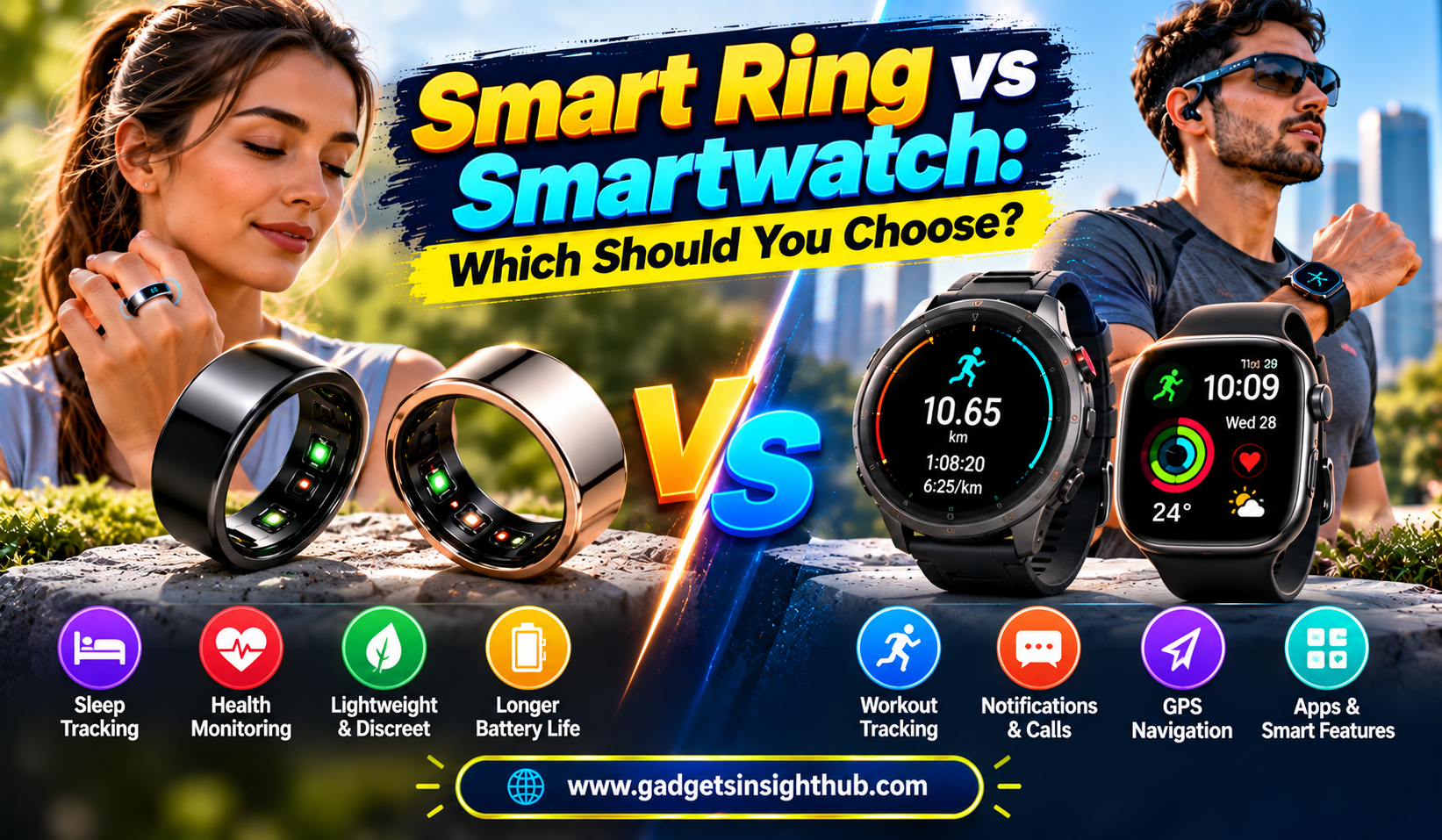
Wearable technology has changed how people monitor fitness, understand sleep patterns, and manage everyday activities. Among the most popular options are smart rings and smartwatches, two devices that offer different ways to stay connected with personal data. While smartwatches provide visible displays, workout controls, and smartphone features, smart rings focus on discreet tracking, comfort, and continuous wellness monitoring.
Choosing between these devices depends on your lifestyle, fitness goals, budget, and preferred features. Someone who enjoys running may appreciate a smartwatch with GPS navigation, while someone interested in sleep tracking may prefer a lightweight smart ring. Both devices have advantages, but neither is automatically the best choice for everyone.
Understanding their differences can help you invest in technology that supports your daily routine without unnecessary features or expenses.
Understanding Smart Rings
A smart ring is a compact wearable device designed to resemble ordinary jewellery while containing miniature sensors and electronic components. It typically connects to a smartphone application, where users can review collected information and explore personal wellness trends.
Most smart rings focus on sleep tracking, heart rate measurements, activity monitoring, and selected temperature-related trends. Depending on the model, they may also provide recovery insights and summaries of daily movement. Their small size makes them suitable for people who prefer wearable technology that does not attract attention.
Smart rings generally do not include large displays. Instead, they collect information in the background and present it through a connected application. This approach reduces the need to interact with the device throughout the day.
Popular options include the Oura Ring 4, Samsung Galaxy Ring, Ultrahuman Ring AIR, and RingConn Gen 2. Each product offers different features, battery performance, application support, and pricing arrangements.
Smart rings are especially attractive to users who prioritise comfort, sleep analysis, and discreet wellness monitoring over extensive on-device controls.
Understanding Smartwatches
A smartwatch is a wrist-worn electronic device that combines fitness tracking with interactive digital features. Unlike a smart ring, it usually includes a screen that displays notifications, workout statistics, messages, and other information directly on the wrist.
Modern smartwatches can monitor heart rate, count steps, record workouts, track sleep, and measure various activity-related metrics. Many models include GPS for outdoor exercise, while selected devices offer navigation, contactless payments, music controls, and calling features.
Popular examples include the Apple Watch Series 11, Samsung Galaxy Watch8, Google Pixel Watch 4, and Garmin Forerunner 265. Their capabilities differ considerably, with some focusing on smartphone integration and others emphasising specialised sports tracking.
The screen makes a smartwatch more interactive. Users can start workouts, review progress, adjust settings, and respond to supported notifications without opening their phones.
However, displays, additional sensors, and frequent interactions can increase power consumption. Some smartwatches require daily charging, while fitness-focused models may last considerably longer depending on their features and settings.
Smart Ring vs Smartwatch: Key Differences
The main difference between these devices is how they collect and present information. Smart rings prioritise discreet monitoring, while smartwatches combine tracking with visible controls and broader digital functionality.
1. Design and Comfort
Smart rings are smaller than smartwatches and resemble traditional jewellery. Their discreet appearance suits people who prefer minimal accessories or do not want a screen on their wrist. A properly fitted ring can be comfortable for sleeping and everyday activities.
Smartwatches are larger and generally more noticeable. They offer different case sizes, strap materials, and designs, allowing users to select options that suit professional, casual, or athletic settings. Some people appreciate their visible displays, while others find wearing a watch throughout the night uncomfortable.
Ring comfort depends heavily on accurate sizing because finger dimensions can change during the day. Smartwatch comfort depends on strap adjustment, case weight, and wrist size.
For discreet everyday wear, a smart ring may be preferable. For people who enjoy interactive technology and visible information, a smartwatch usually offers greater convenience.
2. Fitness Tracking Capabilities
Both devices can track selected fitness measurements, but their strengths differ.
Smart rings generally focus on daily movement, heart rate, sleep, and recovery-related information. They can help users recognise activity patterns and understand whether their routines remain consistent. However, their compact design usually limits the number of immediate workout controls and the amount of information displayed during exercise.
Smartwatches are better suited to people who want detailed workout statistics while exercising. Many models support running, cycling, swimming, strength training, and other activities. GPS-equipped watches can record outdoor routes, pace, and distance without depending entirely on a smartphone.
Advanced sports watches may also offer training plans, performance metrics, elevation information, and navigation tools.
If your main goal is understanding general wellness patterns, a smart ring may be sufficient. If you regularly train for races or want detailed exercise feedback, a smartwatch is generally the stronger choice.
3. Sleep Tracking and Recovery
Sleep tracking is one of the most important reasons people purchase smart rings. Their compact design can make overnight wear comfortable, allowing them to collect information across multiple nights.
Depending on the model, a ring may estimate sleep duration, sleep stages, resting heart rate, heart rate variability, and temperature trends. Companion applications use these measurements to provide summaries and recovery-related insights.
Smartwatches also offer sleep tracking, and some provide detailed information about overnight activity and physiological measurements. However, their size, weight, and strap design can affect comfort for certain users.
The quality of sleep tracking varies by device, and estimated sleep stages are not equivalent to clinical sleep assessments. Consistency and comfortable wear are often more useful than choosing a device solely because it advertises more metrics.
For people who dislike sleeping with a watch, a smart ring is an appealing alternative. Those who comfortably wear a smartwatch overnight may prefer having fitness, communication, and sleep features combined in one device.
4. Battery Life and Charging
Battery life can significantly influence the daily experience of wearable technology.
Many smart rings are designed to operate for several days between charges, although actual endurance depends on the model, sensor activity, and usage. Some include charging cases that make recharging convenient while travelling.
Smartwatch battery performance varies more widely. Full-featured models with bright displays, frequent notifications, and extensive application use may need daily charging. Fitness-focused watches can provide longer endurance, particularly when using power-efficient display technologies and reduced GPS settings.
Charging habits also affect sleep tracking. If a watch needs charging every day, users must choose a suitable time that does not regularly interrupt overnight monitoring. A smart ring with longer practical endurance may reduce this inconvenience.
Before purchasing either device, compare realistic battery estimates for your intended use. Maximum advertised battery life may assume settings that differ from your normal routine.
5. Smartphone Connectivity and Smart Features
Smartwatches generally offer more direct interaction with smartphones. Depending on the model, users can view notifications, answer calls, send messages, control music, access navigation, and run compatible applications.
Some watches support contactless payments and independent mobile connectivity. These features can reduce the need to carry a phone during selected activities, although availability depends on the model, network, region, and service provider.
Smart rings typically rely on companion applications for detailed information. Their primary purpose is collecting and summarising measurements rather than displaying messages or supporting extensive digital interactions.
Some emerging rings may include additional functions, but their capabilities vary widely and should be checked individually.
If you want to manage daily communication and applications from your wrist, a smartwatch is the more versatile option. If you prefer a wearable that operates quietly in the background, a smart ring may fit your lifestyle better.
6. Price and Ongoing Costs
The total cost of a wearable includes more than its initial purchase price.
Smart rings often occupy the premium-accessory category, with prices depending on materials, sensors, brand, and software features. Some manufacturers require a subscription for detailed insights, which adds recurring expenses.
Smartwatches are available across a broader price range. Basic models can provide essential activity tracking, while premium devices offer advanced health features, high-quality displays, navigation, and extensive connectivity.
Certain smartwatch brands also offer optional subscriptions for training programmes or additional wellness information.
When comparing prices, consider the features you will actually use. Paying for advanced navigation makes sense for frequent hikers, but it may offer little value to someone who mainly wants sleep tracking.
Check subscription requirements, replacement accessories, warranty coverage, and battery replacement options before making a final decision.
Who Should Choose a Smart Ring?
A smart ring is an excellent option for people who want discreet wellness tracking without wearing a visible digital device. It may suit office workers, frequent travellers, and individuals who prefer minimalist accessories.
People who prioritise sleep analysis can also benefit from a ring’s compact design, particularly if wearing a watch overnight feels uncomfortable. Its background monitoring approach means users can collect information without regularly interacting with a screen.
Smart rings may also appeal to those who already own a smartwatch but want a more comfortable device for overnight tracking. However, using two wearables introduces additional costs and may create overlapping or inconsistent measurements.
Before choosing a ring, confirm that its sizing, application, smartphone compatibility, and subscription arrangements meet your needs.
Who Should Choose a Smartwatch?
A smartwatch is generally better for people who want an interactive fitness companion and convenient access to digital services. Runners, cyclists, gym users, and outdoor enthusiasts can benefit from visible workout statistics and supported activity profiles.
People who rely on notifications, navigation, music controls, or contactless payments may also find a smartwatch more useful than a smart ring.
Advanced sports watches can provide GPS route recording, performance analysis, and training guidance. These capabilities make them particularly valuable for people preparing for races or exploring unfamiliar outdoor locations.
Smartwatches are also suitable for users who prefer reviewing measurements directly on a device instead of opening a smartphone application.
However, buyers should consider display size, weight, battery life, and compatibility before choosing a model.
Can You Use a Smart Ring and Smartwatch Together?
Yes, using both devices can make sense when each serves a different purpose. A smartwatch can handle workout controls, GPS navigation, and notifications, while a smart ring can provide a more discreet option for overnight monitoring.
This combination may appeal to athletes who want detailed exercise data alongside comfortable sleep tracking. However, not every user needs two devices, and the additional cost may outweigh the benefits.
Using multiple wearables can also produce different readings because sensors, measurement methods, and algorithms vary. Heart rate, calorie estimates, and sleep summaries may not match exactly.
If you choose both, decide which device will serve as your primary source for each measurement. Review their privacy settings and application permissions, particularly when connecting multiple platforms.
For most beginners, starting with one suitable device is a more economical approach.
Final Verdict: Smart Ring or Smartwatch?
The choice between a smart ring and a smartwatch depends on your priorities rather than which category is universally better. Smart rings are attractive for discreet design, comfortable overnight wear, and background wellness tracking. Smartwatches provide stronger interactive features, workout controls, navigation, and broader smartphone connectivity.
Choose a smart ring if sleep monitoring, comfort, and minimal design matter most. Choose a smartwatch if you need detailed exercise statistics, GPS tracking, notifications, and convenient access to applications.
If your budget allows and you have clearly different needs, combining both devices may provide additional value. Otherwise, identify your most important requirements and select the product that meets them without unnecessary expenses.
Ultimately, wearable technology is most useful when it fits naturally into everyday life. The best device is the one you can wear comfortably, understand easily, and use consistently to support your personal fitness and wellness goals.