
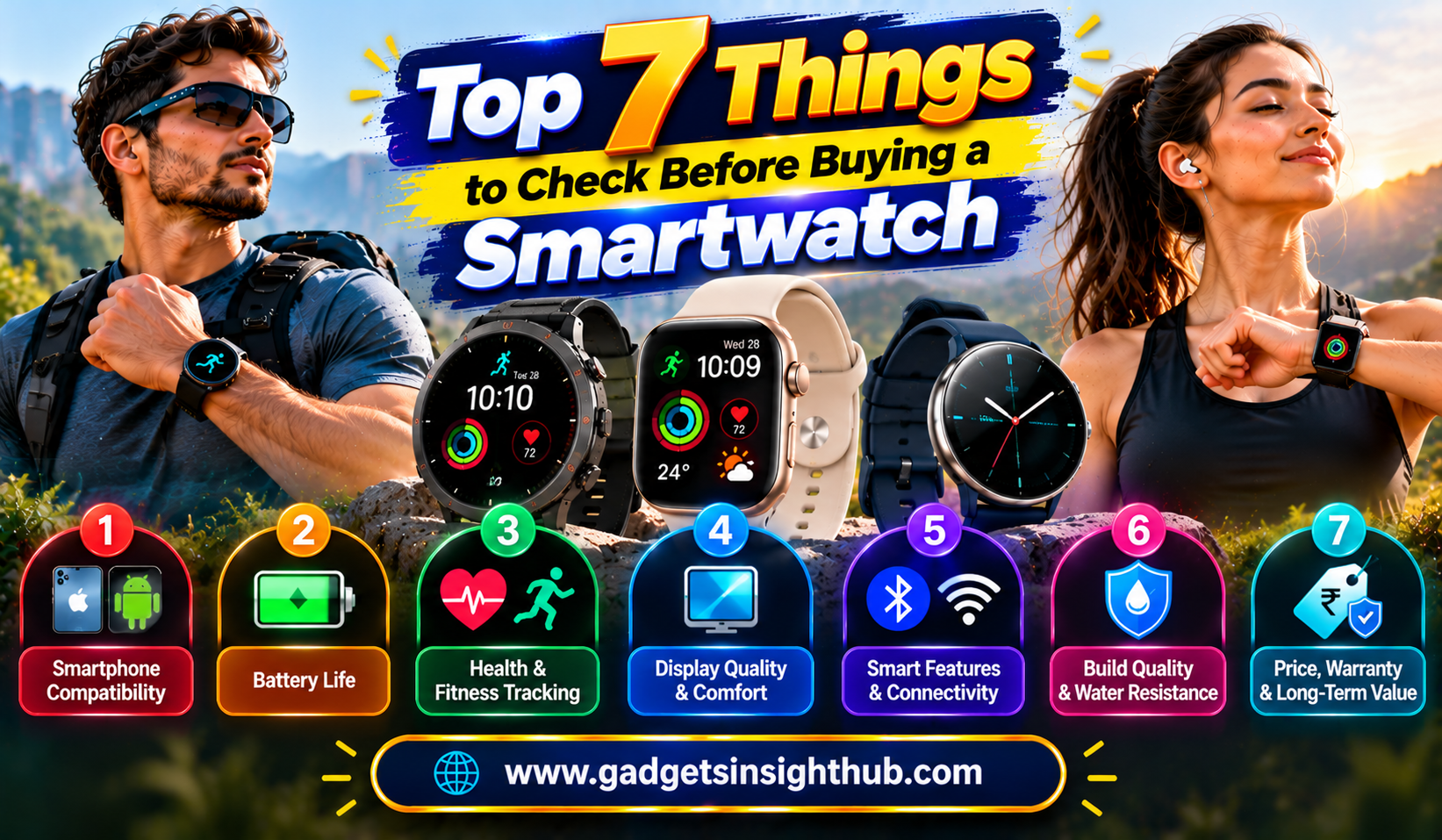
Buying a smartwatch can make everyday life more convenient by helping you track fitness, monitor sleep, receive notifications, and manage important tasks from your wrist. However, with so many models available, choosing the right device can be challenging. Different smartwatches offer different features, battery performance, designs, and levels of smartphone compatibility.
Before making a purchase, it is important to understand which features genuinely matter to your lifestyle. A fitness enthusiast may prioritise GPS accuracy, while someone who wants a daily companion may prefer comfortable construction, reliable notifications, and longer battery life. Price and software support also influence the overall value of a smartwatch.
This guide explains seven important things to check before buying a smartwatch, helping you compare available options and make a more informed decision.
1. Smartphone Compatibility
Smartphone compatibility should be your first consideration when shopping for a smartwatch. Some devices work exclusively with particular operating systems, while others support a broader range of smartphones.
For example, Apple Watch models are designed to work with compatible iPhones. Many Samsung and Google smartwatches operate within the Android ecosystem, although certain features may require specific phone models or manufacturer services.
Before purchasing, check whether the smartwatch supports your current smartphone and operating system version. Also verify that essential functions, such as notifications, calling, health tracking, and application synchronisation, are available on your device.
Compatibility matters because a smartwatch can lose much of its value when important features cannot communicate properly with your phone. Some watches may pair successfully but still restrict advanced functions on unsupported devices.
You should also consider your future plans. If you expect to change smartphones soon, choosing a smartwatch that supports your likely next device can help avoid unnecessary replacement costs.
Always review the manufacturer’s compatibility requirements rather than relying only on the product’s advertised features.
2. Battery Life and Charging Convenience
Battery life determines how often you need to remove your smartwatch for charging. This can influence your experience, especially if you wear the device throughout the day and night.
Some feature-rich smartwatches require frequent charging, particularly when using bright displays, cellular connectivity, continuous health monitoring, and GPS. Fitness-focused watches may last several days or longer, depending on their design and settings.
Consider your everyday routine before deciding. If you regularly travel, exercise outdoors, or track sleep, longer battery life can be especially useful. Frequent charging may interrupt overnight monitoring or leave the device unavailable during an important activity.
Check the manufacturer’s estimated battery life in different operating modes. Maximum battery claims often assume limited usage and may not reflect real-world conditions.
Charging convenience also matters. Some devices use magnetic charging cables, while others offer wireless charging or specialised charging accessories. Replacement chargers and charging speed may influence long-term convenience.
A smartwatch with excellent features but inconvenient battery performance may not suit your lifestyle. Choose a model that balances functionality with realistic charging requirements.
3. Health and Fitness Tracking Features
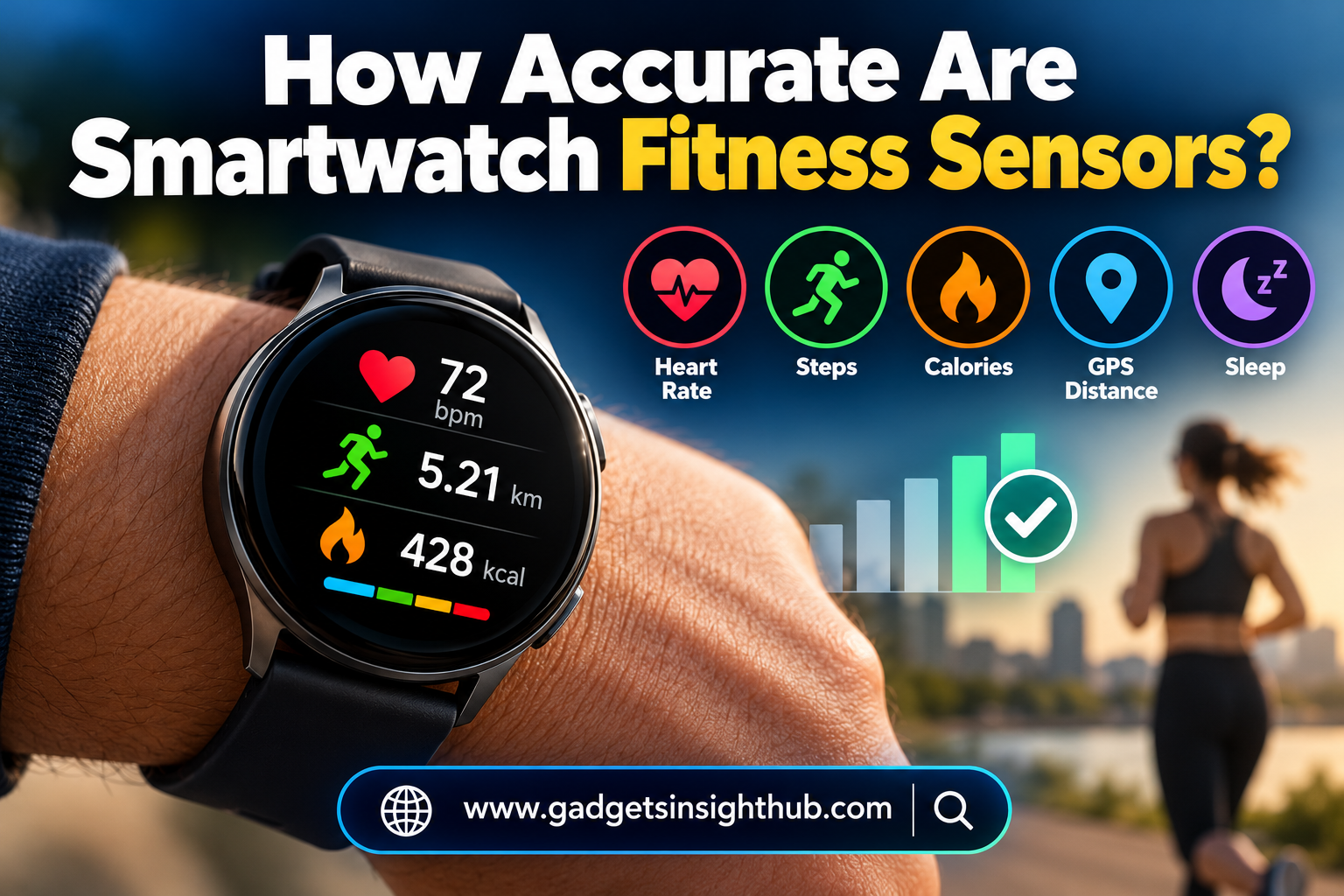
Health and fitness tracking is one of the main reasons people purchase smartwatches. Most modern devices can record steps, monitor heart rate, track workouts, and provide daily activity summaries.
More advanced models may include GPS tracking, sleep analysis, blood oxygen estimates, electrocardiogram functions, and additional wellness measurements. However, availability varies by device, region, and compatible smartphone.
Think about your primary goals before paying for advanced sensors. If you mainly want to increase daily movement, step counting and activity reminders may be sufficient. Runners and cyclists may benefit from GPS, pace information, and detailed workout statistics.
Sleep tracking can help you observe sleeping patterns, while heart rate monitoring provides information about exercise intensity and resting measurements. These features are most useful when they help you understand trends rather than encourage constant checking.
Remember that consumer smartwatch measurements have limitations. Sensor accuracy can vary with movement, fit, and individual characteristics. Health estimates should not replace medical advice or professional testing.
Select a smartwatch with practical tracking features that support your actual needs instead of choosing a model simply because it offers the largest number of measurements.
4. Display Quality and Comfort
Display quality affects how easily you can read information in different environments. A smartwatch should present notifications, workout statistics, and other information clearly without requiring unnecessary effort.
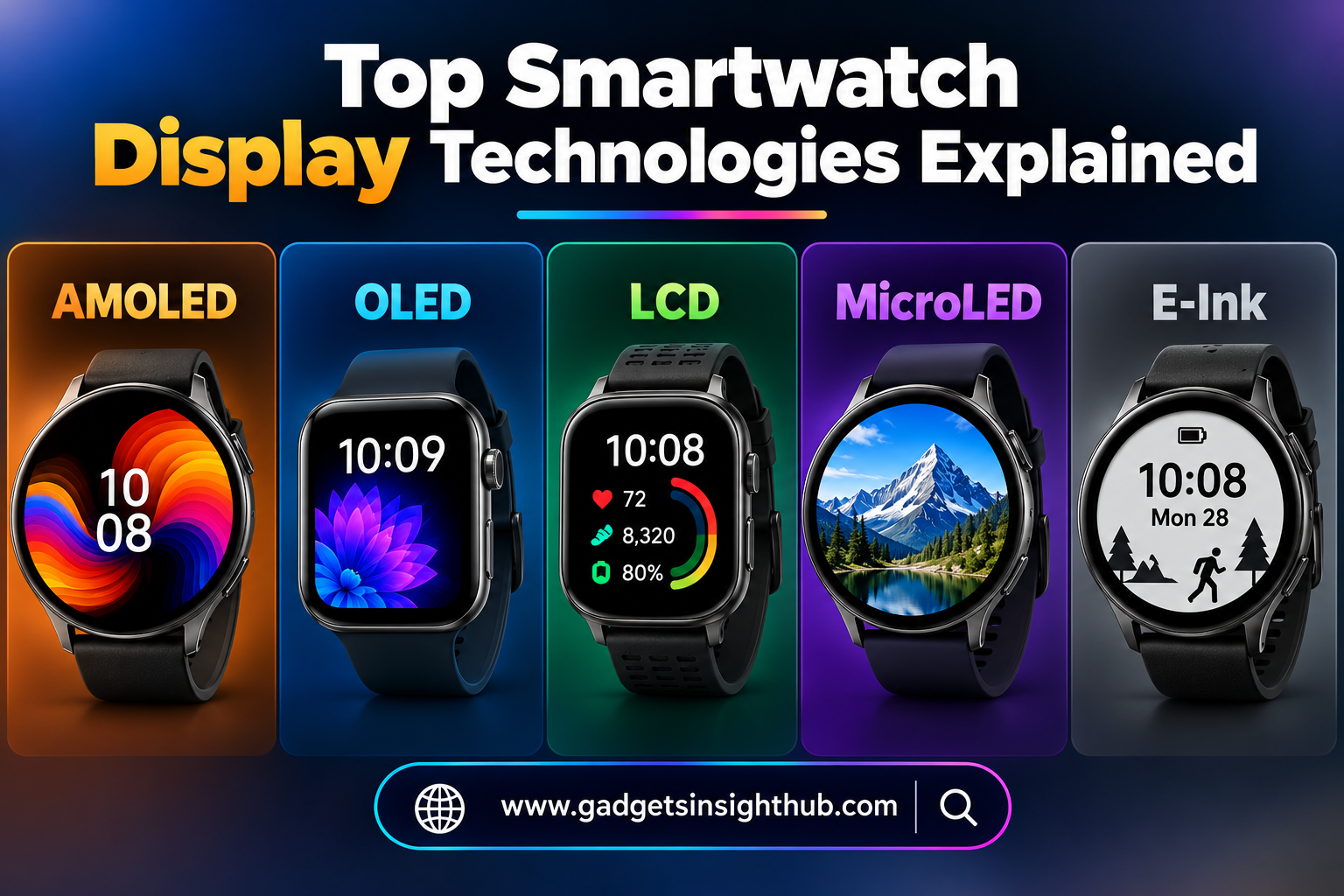
AMOLED displays typically offer vivid colours, deep blacks, and strong contrast. Other display technologies may prioritise power efficiency or outdoor visibility. Your ideal choice depends on how and where you use the device.
Check brightness, text readability, touchscreen responsiveness, and screen size. If you frequently exercise outdoors, ensure the display remains readable in bright sunlight.
Comfort is equally important because a smartwatch may stay on your wrist for many hours. Large cases can feel heavy, while smaller designs may suit people with narrower wrists. Strap materials, adjustability, and ventilation can also affect comfort during exercise and warm weather.
If possible, try the watch on before buying it. Pay attention to whether the case presses against your wrist, whether the strap feels secure, and whether the controls are easy to reach.
A comfortable smartwatch with a clear display is more likely to become a useful everyday accessory than a device that looks attractive but feels inconvenient.
5. Smart Features and Connectivity
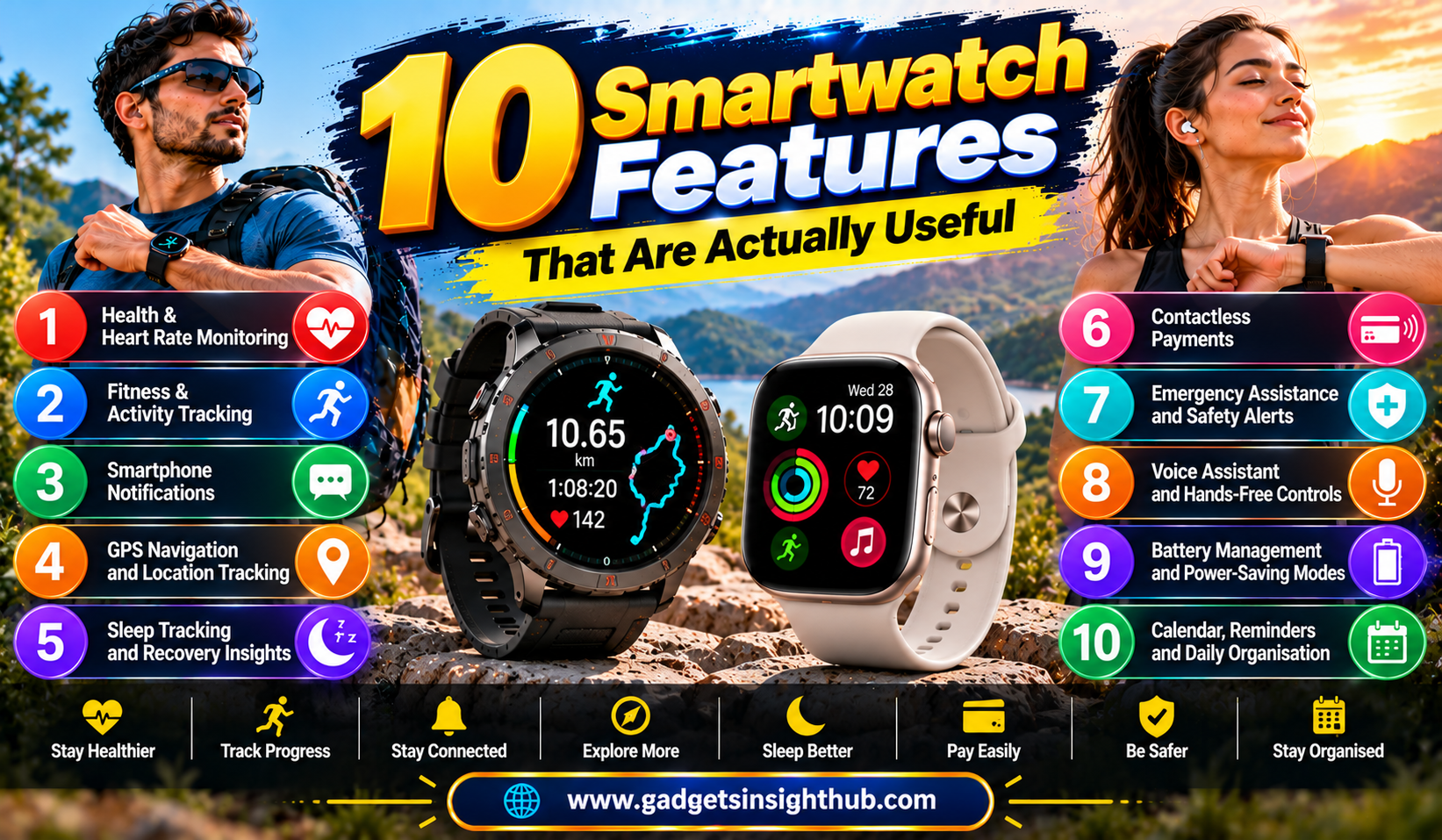
Smart features determine how much your smartwatch can do beyond recording health information. Depending on the model, you may be able to receive messages, answer calls, control music, check navigation directions, set reminders, or use compatible applications.
Contactless payments can be convenient when shopping or exercising without a wallet. Voice assistants may help you set timers, create reminders, or perform selected tasks without touching the screen.
Some smartwatches support independent cellular connectivity, allowing certain functions without a nearby smartphone. However, cellular versions may cost more and require an additional service plan.
Consider which features you will genuinely use. If you primarily want a fitness tracker, paying extra for extensive application support may not be worthwhile. If you manage appointments and communications throughout the day, a more connected device may provide greater value.
Also review notification controls, application availability, and privacy settings. Too many alerts can become distracting, so customisation is important.
Choose connectivity features that make your routine easier rather than adding unnecessary complexity.
6. Build Quality, Water Resistance, and Durability
A smartwatch should withstand the activities you perform regularly. Build quality influences its resistance to everyday wear, while materials affect weight, appearance, and durability.
Models may use aluminium, stainless steel, titanium, glass, or reinforced polymers. Premium materials can improve appearance or durability, but they may increase the purchase price.
Water resistance is especially important for swimmers and people who exercise outdoors. However, water resistance ratings have specific limitations. A watch suitable for swimming may not be designed for diving, high-pressure water, or every type of water sport.
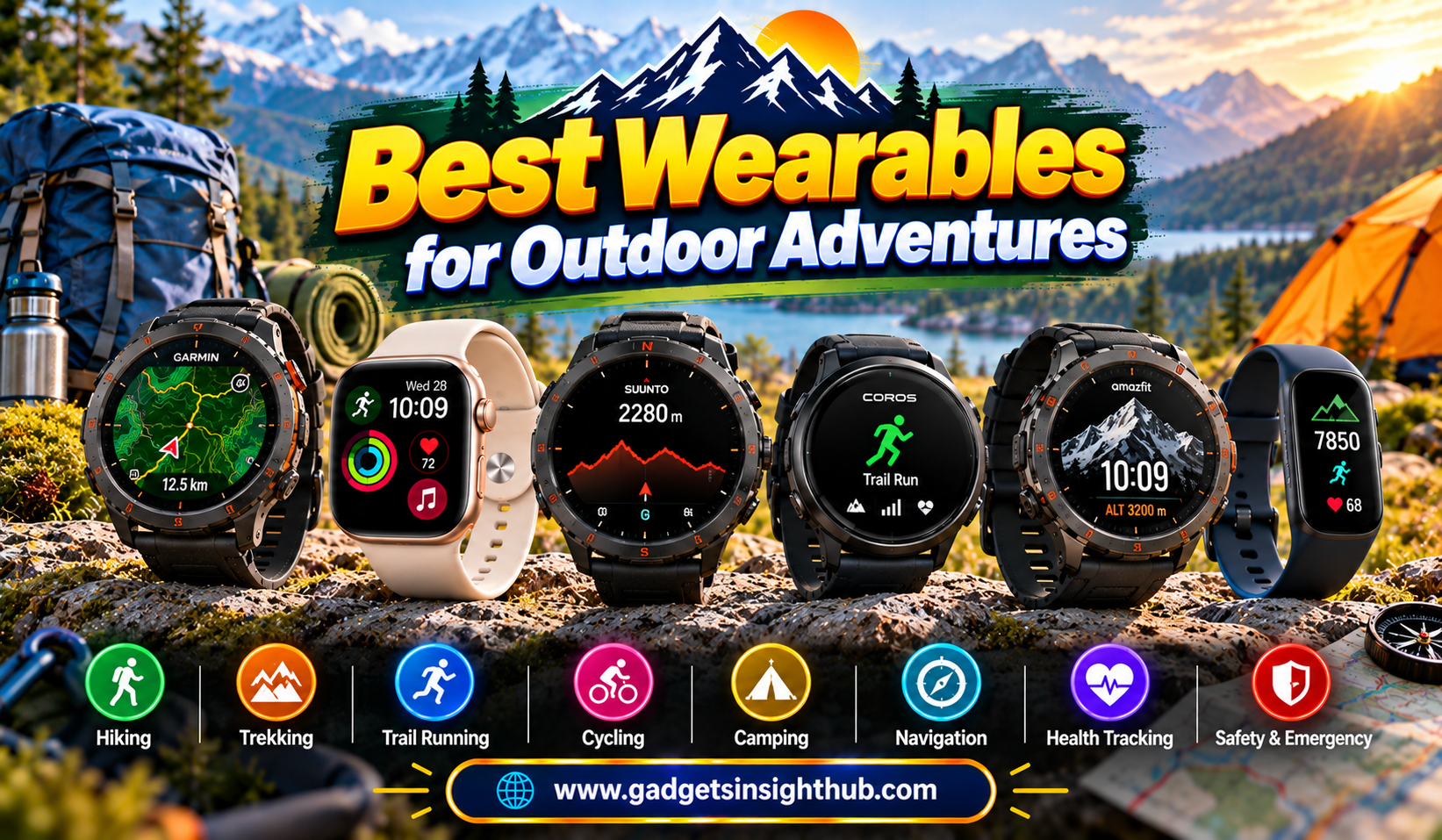
Check the manufacturer’s guidance before exposing the device to water. Also consider resistance to dust, impacts, and temperature changes if you frequently hike, cycle, or work outdoors.
Strap quality matters because straps experience regular movement, sweat, and contact with clothing. Replaceable straps can make a smartwatch easier to maintain and customise.
7. Price, Warranty, and Long-Term Value
Price is an important factor, but the cheapest smartwatch is not necessarily the best investment. You should compare the features, reliability, support, and ongoing costs associated with each option.
Basic models may provide essential activity tracking and notifications at an affordable price. Midrange devices often add better displays, additional sensors, and improved software. Premium smartwatches may offer advanced sports features, navigation, cellular connectivity, or higher-quality materials.
Before purchasing, establish a budget and identify your essential requirements. Compare several models within that range instead of paying for features you are unlikely to use.
Check whether the smartwatch requires a subscription for detailed health insights, training plans, or other services. Consider the cost of replacement straps, chargers, and potential repairs as well.
Warranty terms are equally important. Review the coverage period, exclusions, battery policies, and availability of authorised service centres. Software update commitments can also affect how long the watch remains useful and secure.
Final Thoughts
Choosing the right smartwatch becomes easier when you focus on seven essential factors: smartphone compatibility, battery life, health tracking, display quality, smart features, durability, and long-term value.
Start by identifying how you plan to use the device. Fitness enthusiasts may prioritise GPS and workout analysis, while everyday users may care more about notifications, comfort, and battery performance.
Before purchasing, compare specifications carefully, verify compatibility, and review warranty conditions. Avoid paying extra for features that do not support your routine.
The best smartwatch is not necessarily the most expensive or technologically advanced model. It is the one that fits comfortably, works reliably with your smartphone, provides the features you need, and makes everyday activities simpler.