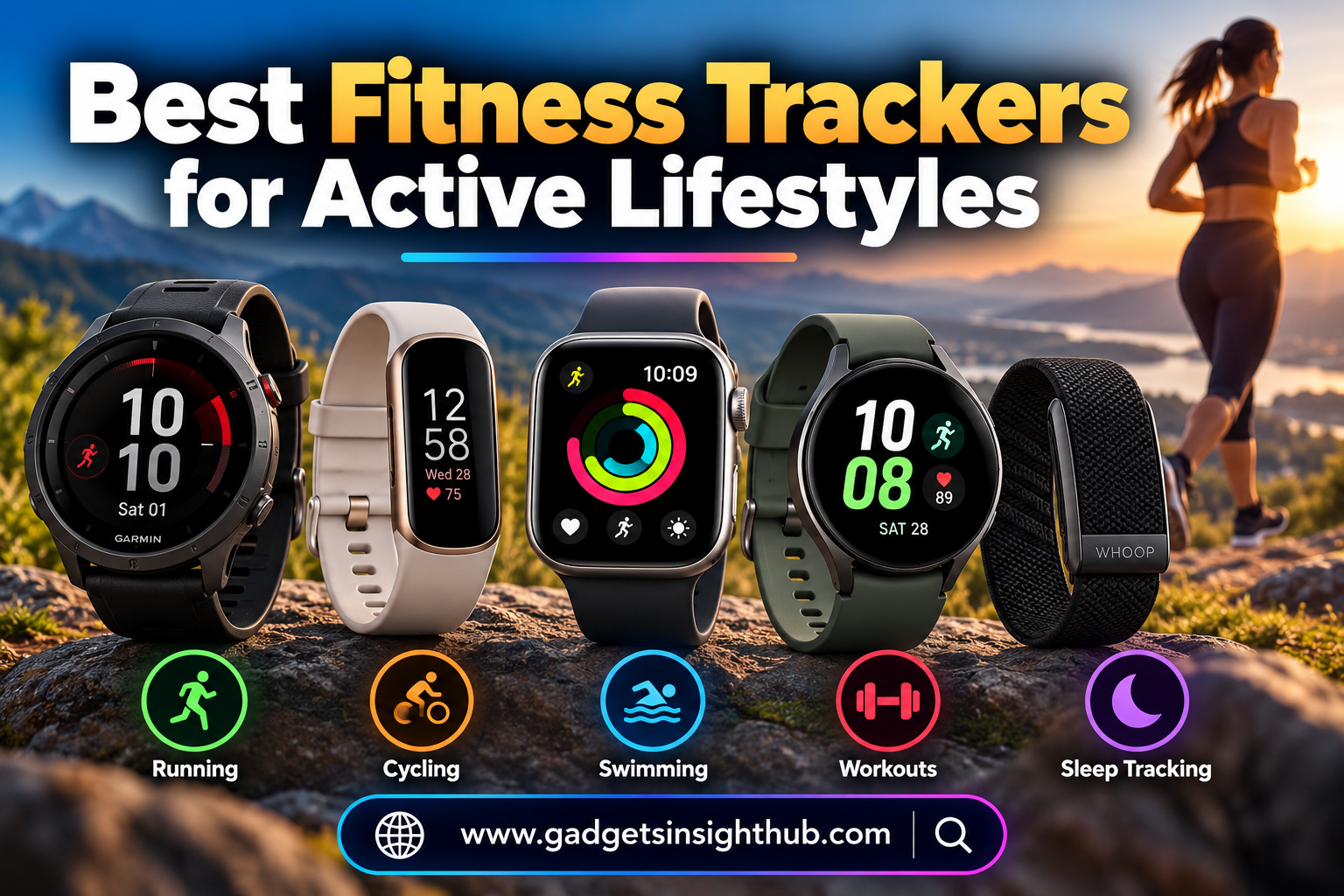
Fitness trackers have become useful companions for people who want to stay active, monitor daily movement, and build healthier routines. These compact wearable devices can measure steps, monitor heart rate, record workouts, track sleep, and provide insights into activity levels. Whether you enjoy walking, running, cycling, swimming, or exercising at the gym, a suitable fitness tracker can help you understand your progress.
Choosing the right device depends on your fitness goals, budget, smartphone compatibility, and preferred features. Some trackers prioritise simplicity and long battery life, while others provide advanced workout statistics and GPS tracking.
Here are eight fitness trackers worth considering for active lifestyles, along with their key features and the types of users they suit best.
1. Fitbit Charge 6
The Fitbit Charge 6 is a compact fitness tracker designed for people who want useful health and activity information without wearing a large smartwatch. Its lightweight design makes it suitable for everyday use, exercise sessions, and overnight sleep monitoring.
The device tracks steps, heart rate, sleep, and supported workouts. It also offers connected GPS, which uses a compatible smartphone to record outdoor routes. Users can review their activity through the Fitbit application and monitor changes in their daily habits.
Its straightforward interface makes it appealing to beginners who want to establish consistent exercise routines. Additional features include supported smartphone notifications and contactless payment functionality in compatible markets.
Some advanced insights and services may require a paid subscription, so buyers should check current membership conditions.
The Fitbit Charge 6 is best for people who want a relatively simple tracker that combines fitness monitoring with everyday convenience.
2. Garmin Vivosmart 5
The Garmin Vivosmart 5 is a slim fitness band focused on activity monitoring and everyday wellness. Its compact design is suitable for people who prefer a discreet wearable rather than a large screen.
It tracks steps, heart rate, sleep, and selected wellness measurements. Users can also monitor daily activity and review summaries through Garmin’s companion application.
The tracker provides useful reminders and activity information that can encourage people to move more consistently throughout the day. Its simple interface makes it suitable for users who want essential fitness features without complicated menus.
Unlike dedicated sports watches, the Vivosmart 5 does not provide built-in GPS for independent route recording. Users who want outdoor distance and route information may need a compatible smartphone.
It is a practical choice for office workers, casual walkers, and people beginning a fitness routine. Its main strength is everyday monitoring rather than advanced athletic analysis.
3. Xiaomi Smart Band 10
The Xiaomi Smart Band 10 is an option for budget-conscious users who want a lightweight fitness tracker with a colour display and a broad selection of everyday features.
Depending on the supported configuration, it can track steps, heart rate, sleep, activity levels, and multiple workout types. The display allows users to review statistics and notifications without frequently reaching for a smartphone.
Its compact construction is convenient for everyday wear, while its battery performance can make it appealing to people who prefer charging less frequently. Actual endurance depends on display settings, sensor use, and workout frequency.
GPS capabilities and connected features vary by configuration, so users who regularly run outdoors should check the exact model specifications.
The Smart Band 10 is suitable for beginners, students, and casual fitness enthusiasts who want accessible activity tracking at a competitive price. It provides a useful starting point for people who want to monitor daily movement without spending heavily on premium wearable technology.
4. Garmin Forerunner 265
The Garmin Forerunner 265 is a sports-focused smartwatch that suits runners and active users who want more detailed workout information than a basic fitness band provides.
It includes GPS tracking, heart rate monitoring, running statistics, and training analysis. Users can review pace, distance, exercise intensity, and performance trends across their sessions.
Its training features can help runners structure their workouts and understand how exercise affects recovery. The watch also supports other activities, including cycling and selected gym workouts.
The bright AMOLED display makes statistics easy to read, while its sports-focused design supports regular training.
Because it offers more advanced features than simple fitness trackers, it may be unnecessary for people who only want step counting and basic wellness monitoring. Its price is also higher than that of most entry-level bands.
The Forerunner 265 is best suited to committed runners, endurance athletes, and people who want structured fitness data to guide their training.
5. Samsung Galaxy Fit3
The Samsung Galaxy Fit3 is a lightweight fitness band designed for everyday activity tracking and basic wellness monitoring. Its slim construction makes it comfortable for walking, general exercise, and daily wear.
The band supports step counting, heart rate monitoring, sleep tracking, and multiple workout modes. Its display presents activity summaries and compatible smartphone notifications in an accessible format.
Battery life can extend across several days, depending on usage and settings. This makes it convenient for users who prefer not to charge their wearable every night.
Compatibility is an important consideration. Buyers should confirm that the device works with their smartphone and that their preferred features are supported.
The Galaxy Fit3 is especially suitable for people who want an affordable, straightforward fitness band rather than a full smartwatch. It provides essential activity information without requiring users to navigate extensive training menus or advanced sports statistics.
6. Amazfit Band 7
The Amazfit Band 7 is designed for users who want everyday fitness monitoring, a larger display, and a range of wellness features at an accessible price.
It supports step counting, heart rate tracking, sleep monitoring, and multiple workout profiles. The companion application organises collected information into summaries that help users understand their daily activity and exercise habits.
Its lightweight construction makes it appropriate for all-day wear, while battery efficiency is an important attraction for people who want fewer charging interruptions.
The Band 7 does not provide built-in GPS for independent route recording, so outdoor runners may need a compatible phone for connected tracking.
It is best for casual fitness enthusiasts who want a practical device for walking, general workouts, and monitoring everyday routines. Before purchasing, compare its current availability, application support, and features with newer alternatives in the same price range.
7. Whoop 5.0
Whoop 5.0 takes a different approach to fitness tracking by focusing on recovery, sleep, and training strain rather than offering a conventional display.
The device collects supported physiological measurements and presents its information through a smartphone application. Users can review sleep patterns, heart rate trends, and recovery-related estimates to understand how their routines relate to physical activity.
Its screen-free design may appeal to athletes who prefer to review information after a workout instead of checking a watch throughout the day.
Whoop’s membership model is a significant consideration because access to its ecosystem depends on subscription terms. Buyers should compare the ongoing cost with their budget and the value of the insights they expect to use.
The tracker is particularly suitable for people who exercise regularly and want to examine recovery patterns. Casual users who only need step counting or simple workout summaries may find a conventional fitness band more economical.
8. Apple Watch SE 3
The Apple Watch SE 3 is a smartwatch rather than a dedicated fitness band, but it is a strong option for active people who want fitness tracking alongside communication and everyday applications.
It supports activity monitoring, workout recording, heart rate measurements, sleep features, and compatible applications. Users can review exercise statistics, receive notifications, and access selected services directly from their wrist.
Its integration with the Apple ecosystem makes it convenient for people who already use an iPhone. However, compatibility is limited compared with trackers that support multiple smartphone platforms.
Battery life and charging requirements should also be considered, particularly if you want to monitor sleep every night or record lengthy workouts.
The Apple Watch SE 3 suits users who want one device for fitness and everyday tasks. It may cost more than a basic tracker, but its interactive features provide additional value for people who use them regularly.
How to Choose the Best Fitness Tracker
Start by identifying your main activity. For walking and everyday movement, a basic tracker with step counting and heart rate monitoring may be sufficient. Runners and cyclists should prioritise GPS capabilities, workout statistics, and comfortable construction.
Battery life is another important factor. Some trackers can operate for several days, while full-featured smartwatches may require more frequent charging. Consider whether you want continuous sleep monitoring and how often you record workouts.
Comfort matters because a tracker is most useful when you wear it consistently. Check the strap material, device weight, screen readability, and fit before purchasing.
Also review smartphone compatibility, subscription costs, and application features. Some devices provide detailed training insights only through paid services, while others include core information without recurring fees.
Remember that calorie expenditure, sleep stages, and some health measurements are estimates. Use these figures to observe patterns rather than treating every reading as exact.
Conclusion
The best fitness tracker depends on your activity level, budget, and preferred features. Fitbit Charge 6 and Garmin Vivosmart 5 are suitable for everyday monitoring, while Xiaomi Smart Band 10 and Samsung Galaxy Fit3 provide accessible options for beginners. Garmin Forerunner 265 suits runners who need advanced training data, and Whoop 5.0 focuses on recovery insights.
Before choosing a device, compare comfort, battery life, tracking capabilities, compatibility, and ongoing costs. A well-selected fitness tracker can help you monitor progress, maintain consistent activity, and develop healthier habits without making exercise unnecessarily complicated.